The shape of biological structures, ranging from flower petals to the limbs or organs of animals, is often naturally best suited for performing specific functions. Biological structures also often present curved surfaces with specific functional advantages, such as facilitating the drainage of water, increasing a structure’s strength or aerodynamic efficiency, or supporting heavy loads.
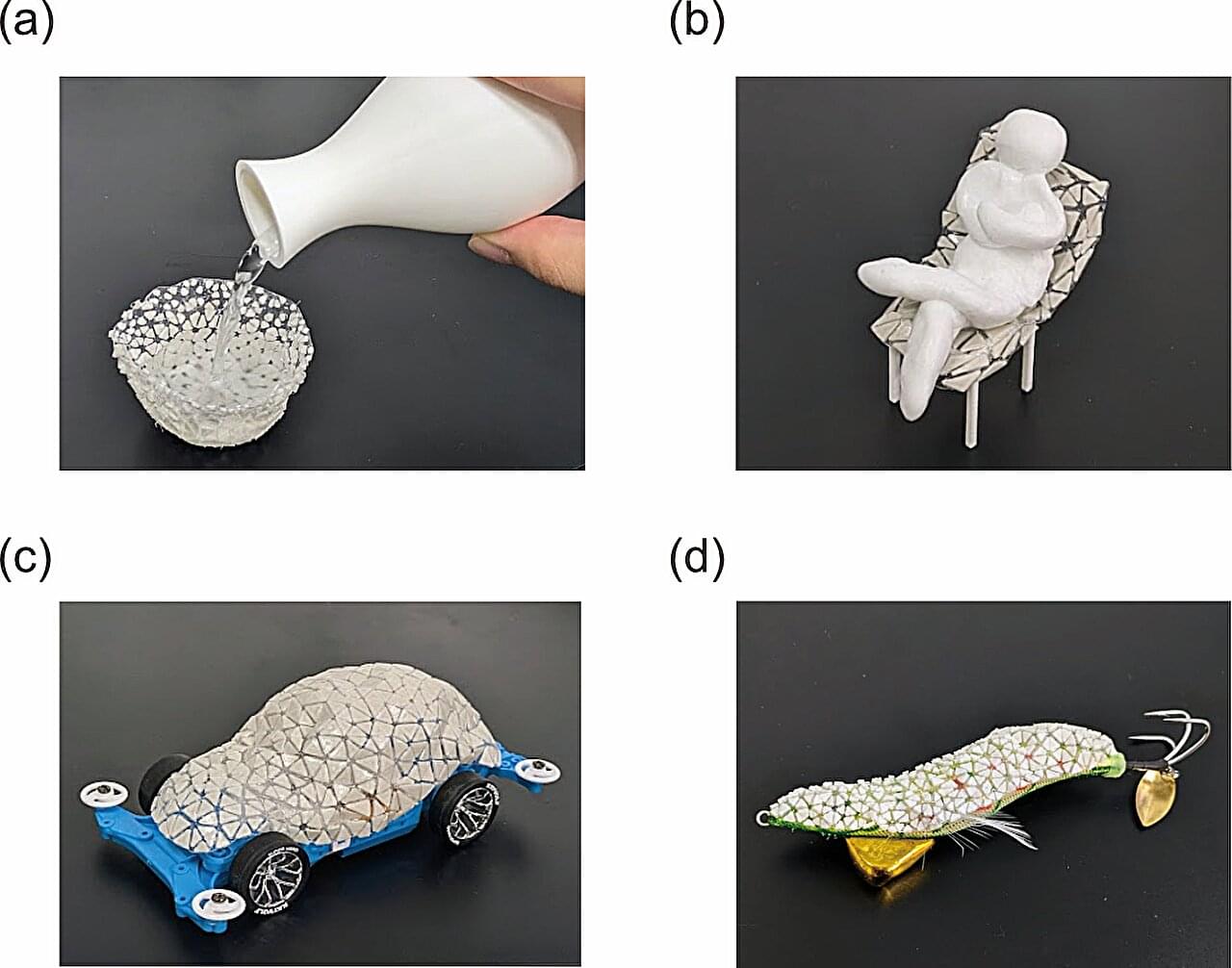
Researchers at Kyoto University recently developed a new method to create three-dimensional (3D) structures with curved surfaces, drawing inspiration from the process through which biological structures grow and acquire specific shapes. Using their proposed fabrication strategy, introduced in a paper published in Journal of the Royal Society Interface, they were able to convert flat sheets into curved structures with various complex shapes.
“The starting point for our study was the idea that the 3D forms of living organisms might be explained by spatial patterns of growth-rate differences,” Kentaro Morikawa, first author of the paper, told Tech Xplore.