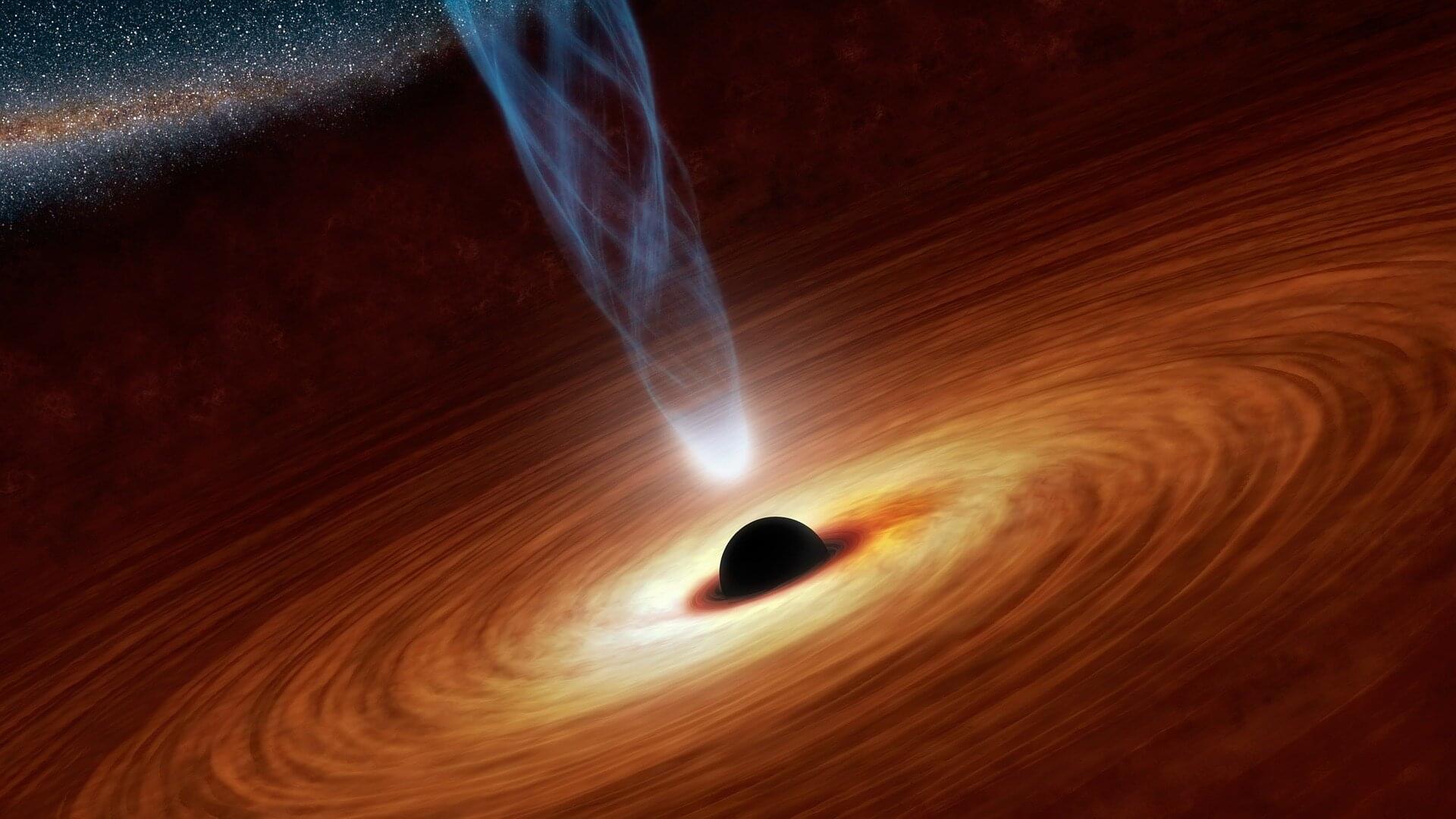
Hawking radiation is a form of radiation emitted by black holes, as theoretically predicted by Stephen Hawking. It suggests that black holes do not merely swallow matter—as had previously been assumed—but also emit very faint radiation themselves. This radiation has not yet been observed in space; instead, researchers use models in the laboratory that mimic the behavior of black holes.
Although the effect of Hawking radiation is well known in astrophysics, the mechanism by which it arises in a gravitational context has not yet been fully elucidated. A scientist from Paderborn University along with an international team of researchers from the Weizmann Institute of Science in Israel and Cinvestav in Mexico is now shedding light on this mechanism using gravitational analogs in the laboratory.
The team has theoretically modeled the process by which Hawking radiation is generated in a nonlinear optical environment, identifying a simple, direct mechanism in the process. Furthermore, the team was able to observe in experiments that the radiation affects the system. The results have now been published in Nature.