When a star dies, it generates an explosion of elemental nuclei and hurls them into space. Those elements, called cosmic rays, travel at nearly the speed of light, and eventually some of them encounter manmade detectors. Recording how many of each of these elements show up helps scientists better understand cosmic processes—but despite incredible research advances over the last century, uncertainty around how these elements transform as they travel across the light-years has left fundamental questions about our galaxy’s composition unanswered.
Priyarshini Ghosh, a UMBC nuclear physicist with the Center for Space Sciences and Technology, is at the forefront of research that could significantly improve our understanding of these cosmic phenomena.
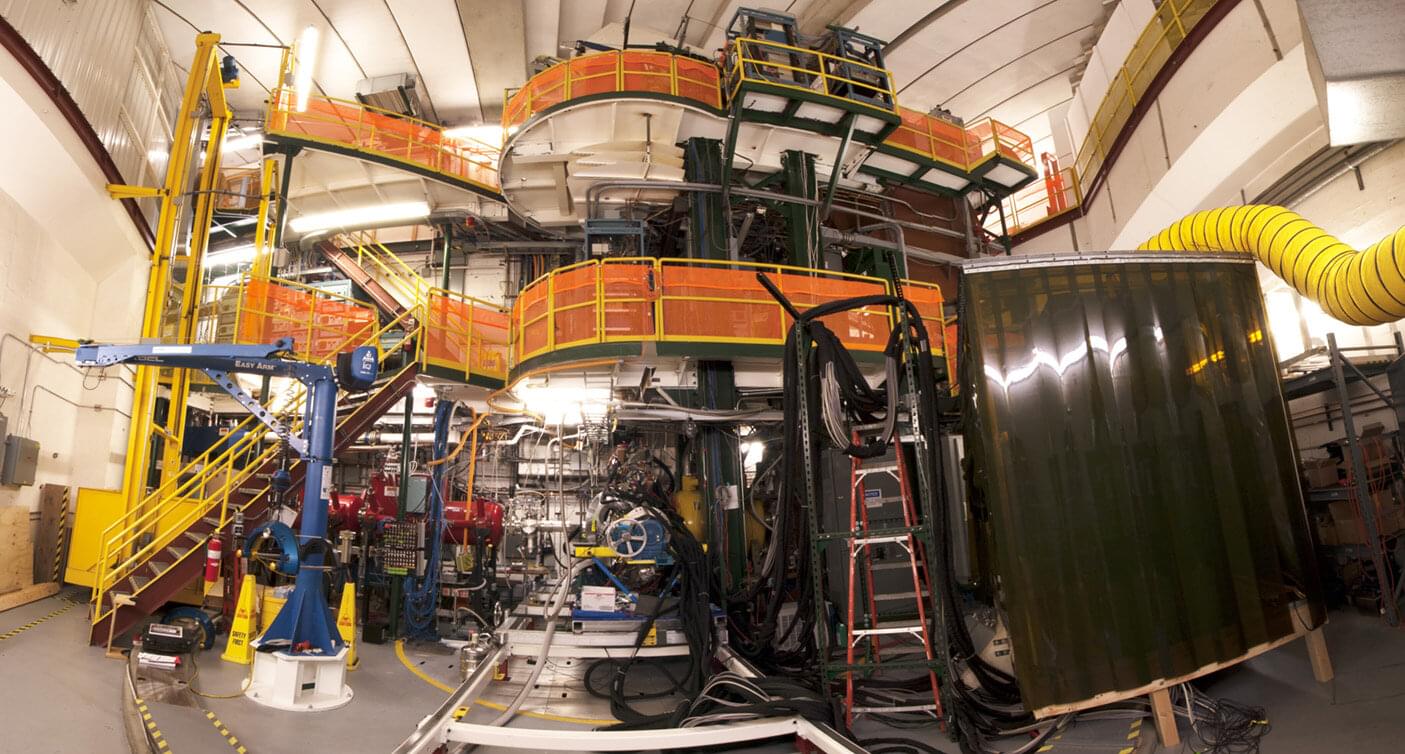
Ghosh and her collaborators have just completed a pioneering experiment at the Facility for Rare Isotope Beams (FRIB) at Michigan State University, where they generated and then fragmented a beam of chromium-52 nuclei. Chromium-52 is of particular interest because it can shed light on different processes happening in our galaxy, and yet it has never been measured.