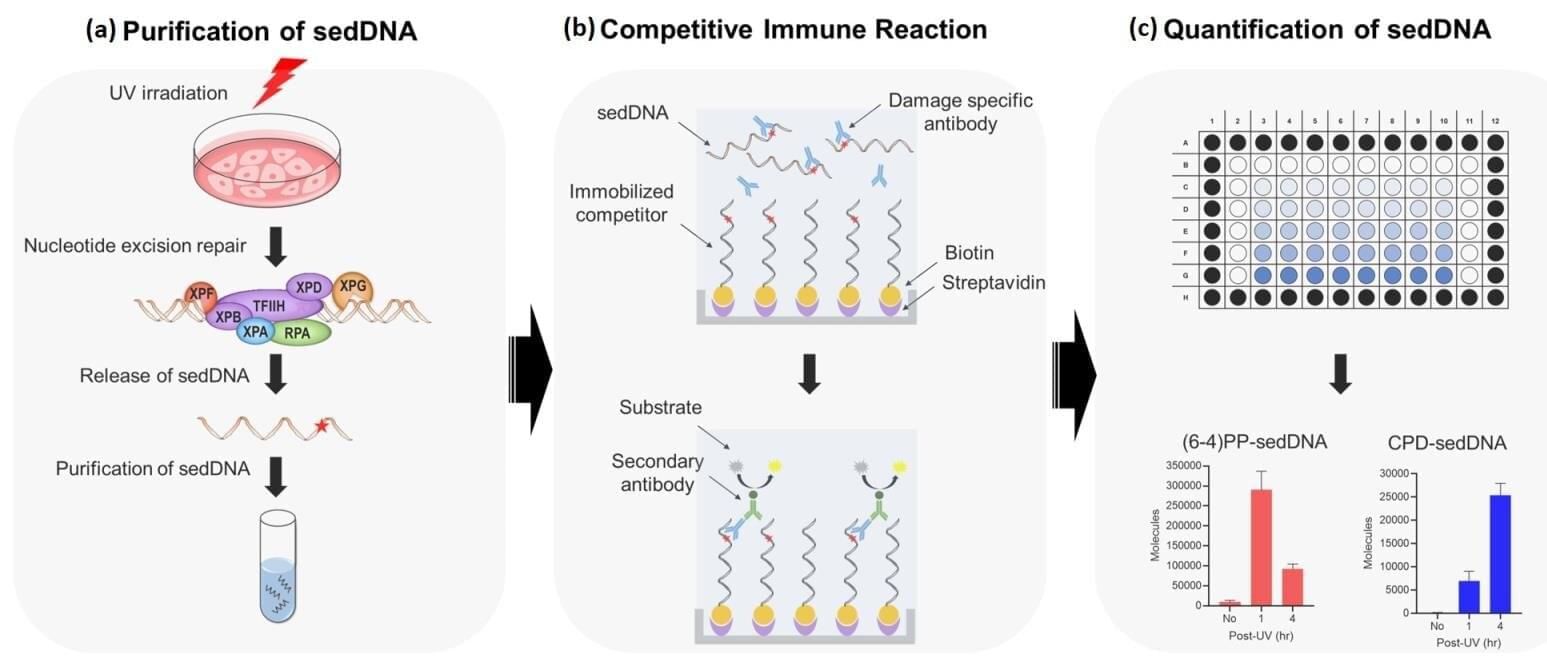
The Korea Research Institute of Standards and Science has developed an ultrasensitive immunoassay-based analytical platform that can detect and quantify trace amounts of “Small Excised Damaged DNA (sedDNA)” fragments generated during cellular DNA repair. This technology enables highly sensitive detection with quantification down to the level of several thousand molecules, measuring up to 22 times more DNA fragments than conventional methods. It provides a new analytical foundation for comparing DNA repair capacity between individuals and studying cellular responses to anticancer drugs and carcinogenic agents.
Human DNA is continuously exposed to damage from ultraviolet light, chemical agents, smoking and normal metabolic processes. If such damage is not properly repaired, mutations can accumulate and lead to aging and diseases such as cancer. To maintain genomic stability, cells activate the Nucleotide Excision Repair (NER) system, which removes damaged DNA segments and replaces them with newly synthesized DNA. The small excised DNA fragments generated during this process serve as important indicators of DNA repair efficiency and kinetics, providing a valuable tool for studying disease mechanisms and predicting treatment responses.