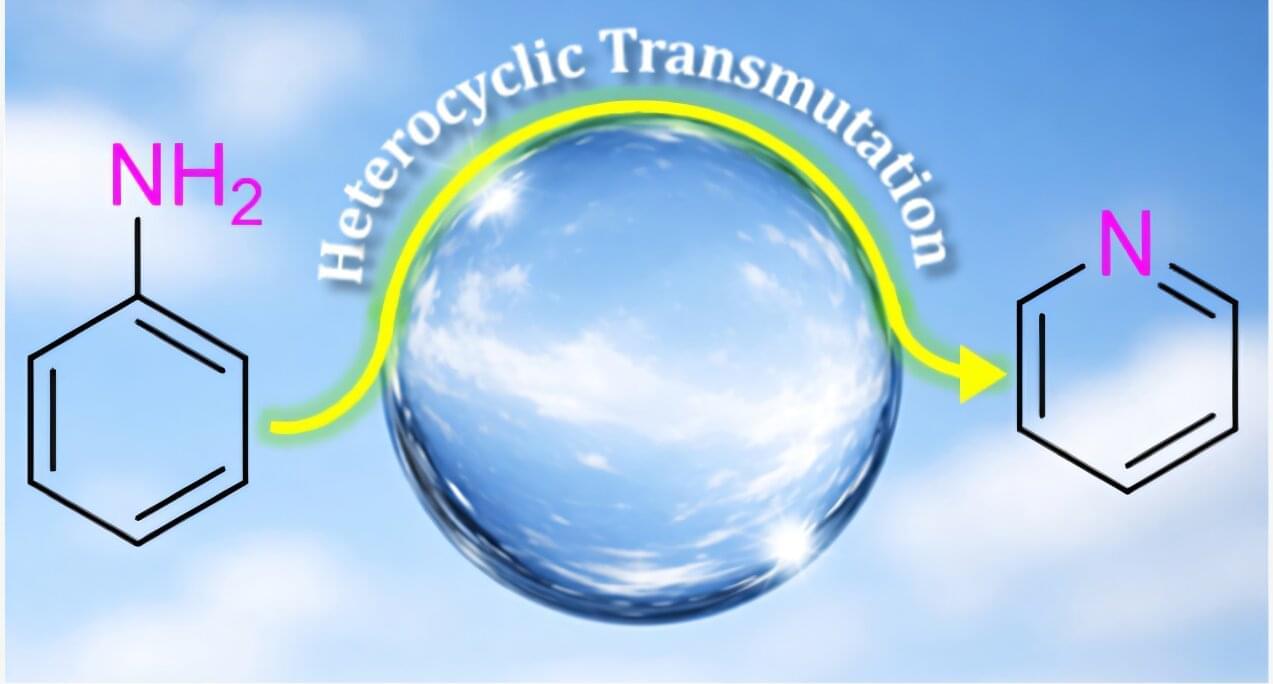
Aniline can now be transformed into pyridine without adding any catalysts, oxidants or toxic reagents. In a recent study published in the Journal of the American Chemical Society, researchers achieved skeletal editing, involving the reorganization of the carbon-nitrogen bonds within an aromatic ring, by turning an aqueous solution of aniline into a mist of microdroplets.
During its millisecond-long airborne lifespan, aniline underwent rapid molecular rearrangement, inserting nitrogen into the aromatic ring and forming pyridine, driven by the uniquely active air-water interface in microdroplets. The green, reagent-free reaction converted up to 80% of the starting material into the product under ambient conditions, eliminating the added energy cost often required to carry out such conversion reactions.
By testing droplets of different sizes, charges and acidity levels, researchers found that the reaction is boosted at the droplet’s interface, a zone that is rich in protons and highly polarized. The smaller the droplet, the larger its reactive surface area relative to its volume, and the better the reaction outcome.