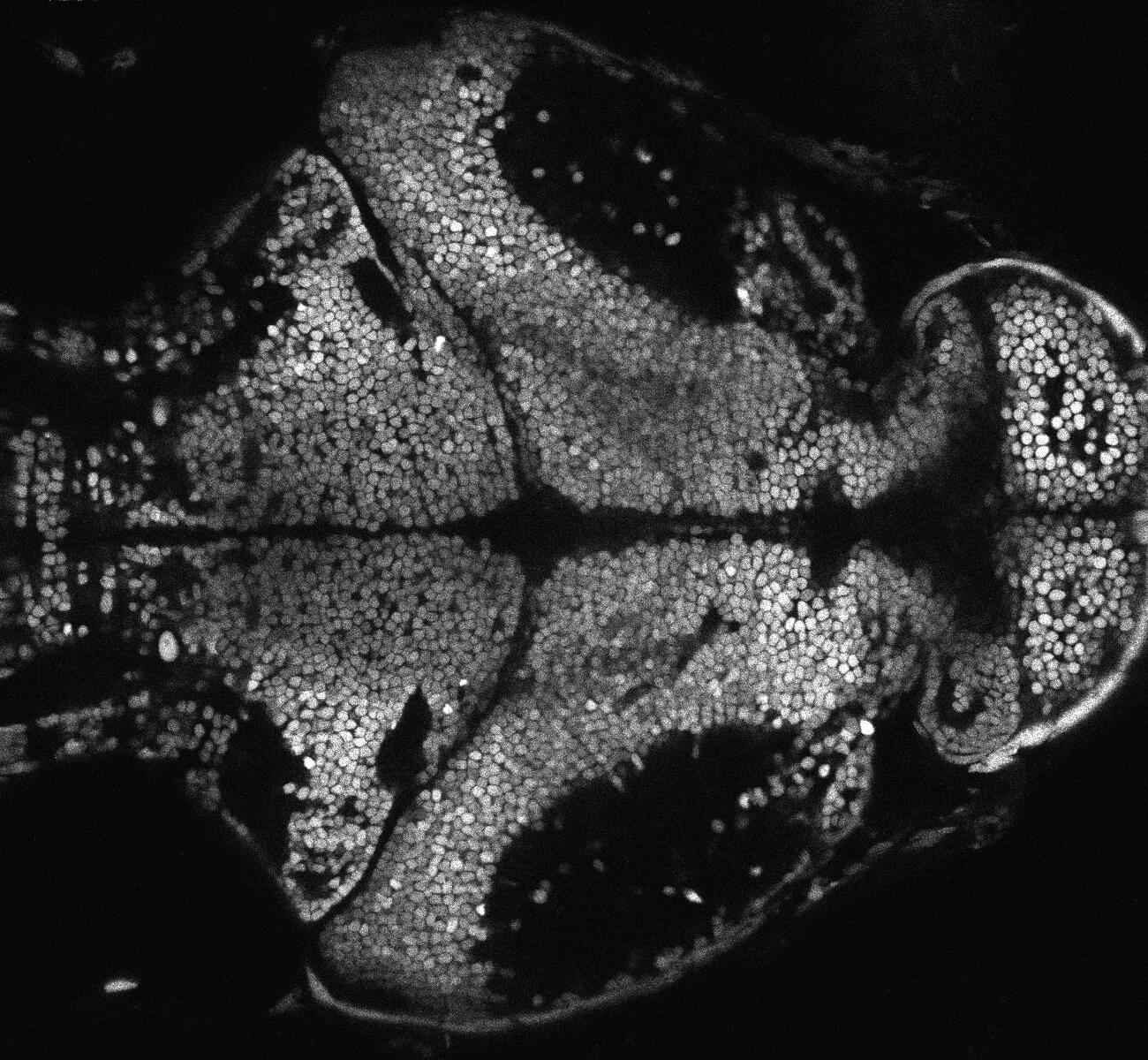
The altered presence of tiny fragments of neuronal genes, called microexons, causes hyperarousal in zebrafish. This is the main conclusion of an international study led by Pompeu Fabra University (UPF) and the Center for Genomic Regulation (CRG). An abnormal pattern of neural microexon presence leads to a hyperarousal state characterized by heightened neural activity and insomnia, commonly associated with stress but also with neurodevelopmental disorders.
Arousal regulation is highly conserved in evolution. Therefore, this finding could help researchers understand the mechanism underlying some human neurodevelopmental disorders, such as autism and schizophrenia, conditions associated with microexon mutations.
To survive, animals need to be ready to react to external and internal stimuli. This activation of the central nervous system, arousal, is highly conserved throughout the animal kingdom.