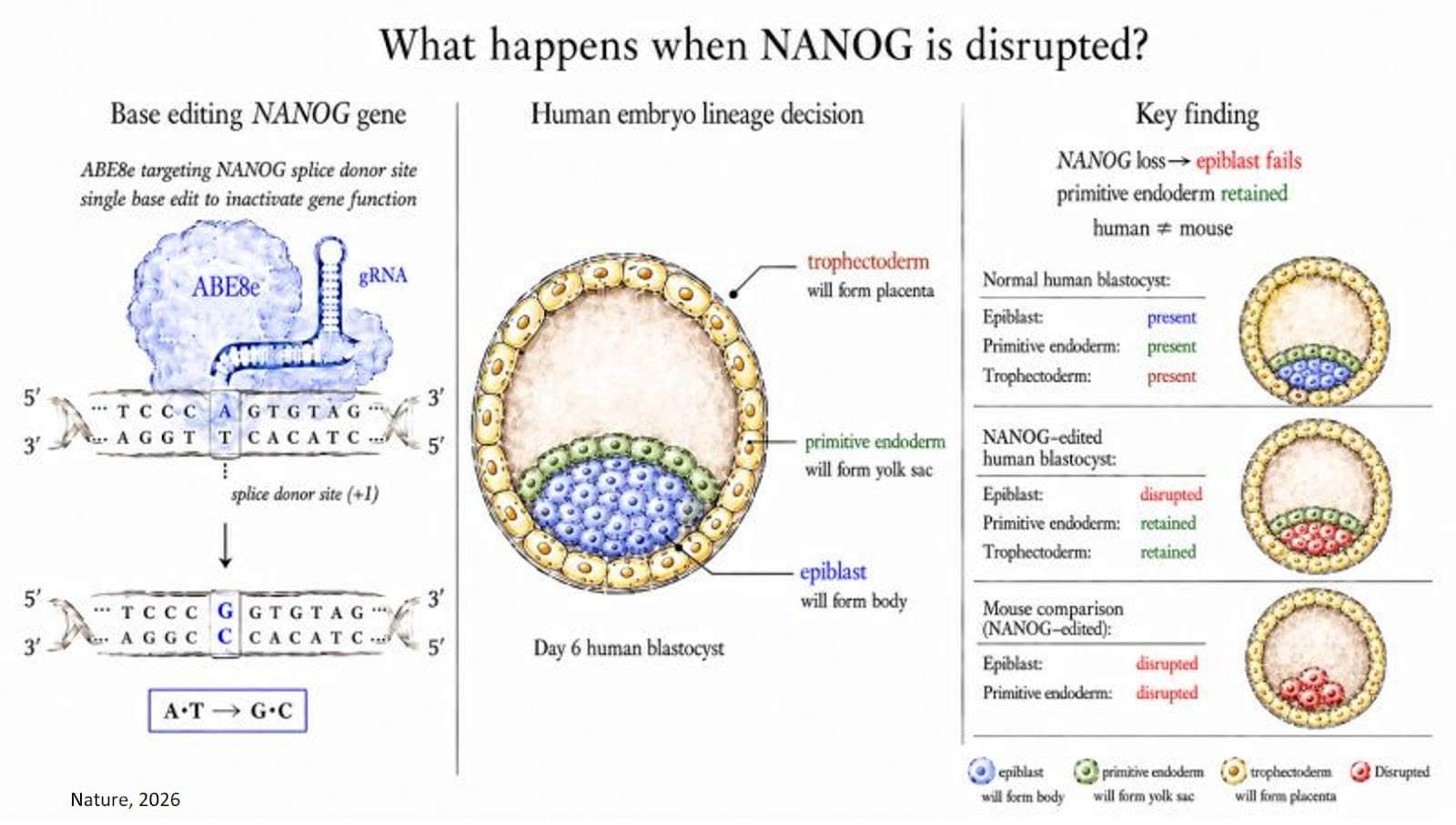
New research has shown that a genome editing technique can be used to alter a single gene in human embryonic cells, enabling the study of very early human development in unparalleled detail.
The technique, called base editing, is a more precise version of the genome editing technique CRISPR/Cas9. It can change a single nucleotide base pair — the basic building block of DNA — within a human genome of approximately 3 billion base pairs.
Using base editing, the researchers blocked a gene called NANOG in very early-stage human embryos, and found that the cells of the early embryo could not develop into more specialised pluripotent cells called the epiblast — which later form the body.