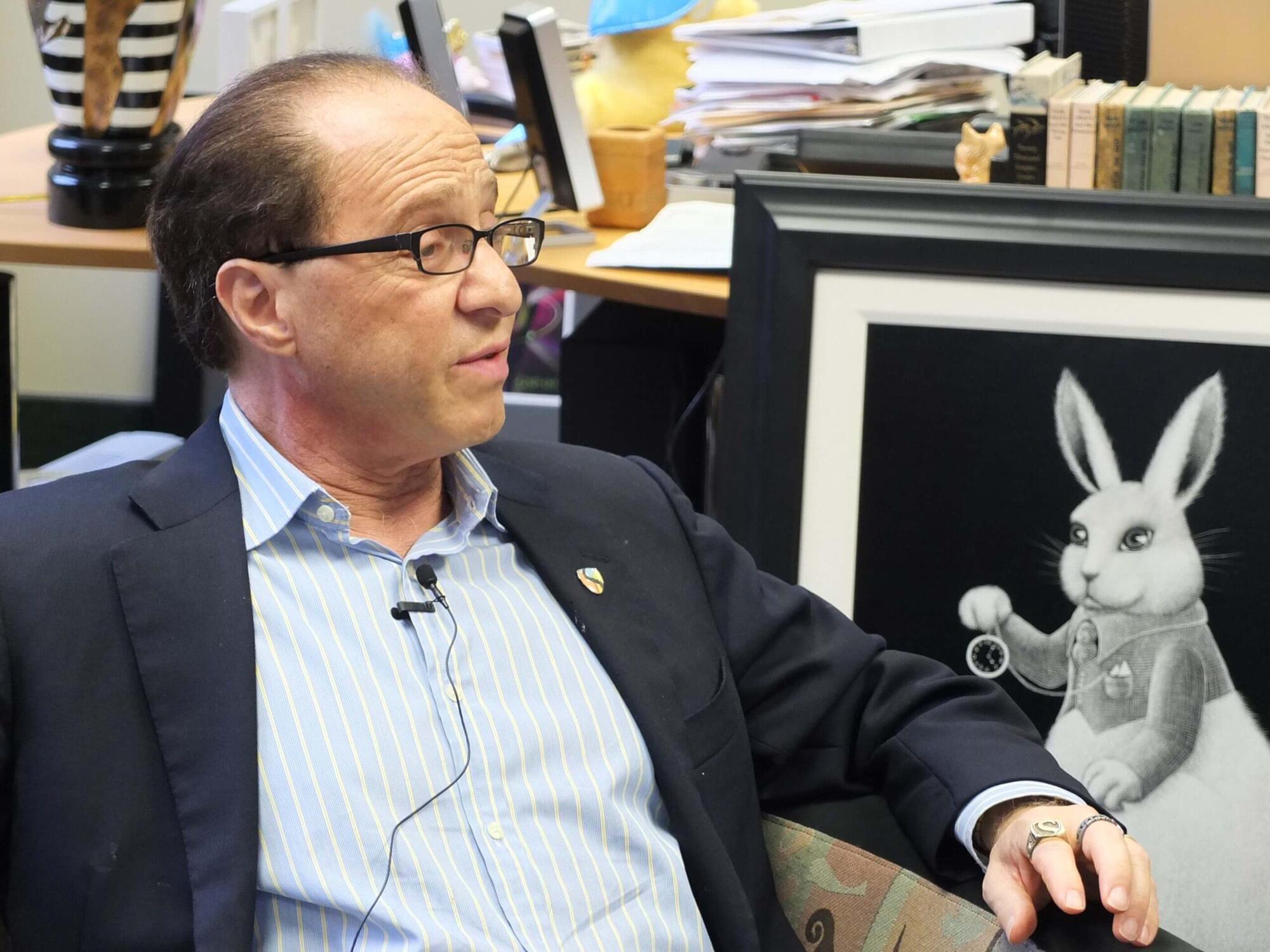
Fourteen years ago, I sat down in Ray Kurzweil’s office in Boston, fumbled with a slipping lavalier mic, and asked the man whose book pulled me into this whole world a deceptively simple question: Can we reverse-engineer the human mind?
What strikes me now, rewatching this, is how little the core debate has aged. Back in 2012, we argued about Watson, the Turing Test, whether AI deserves rights, and whether a machine would ever care about humanity’s hardest problems. Swap a few names, and that is the front page today.
But the line that has stayed with me all these years was not about #technology at all. When I asked Ray how a kid decides at age 5 to become an inventor, his answer ran counter to every productivity guru on the internet:
“Do not be too concerned about what is practical. Follow your passion and be who you would like to be.”
Coming from one of the most relentlessly practical inventors alive, the man behind the flat-bed scanner, text-to-speech, and the music synthesizer, that is not soft advice. It is a thesis about #innovation itself.
There is a reason I keep coming back to this conversation when people ask me about the #singularity and #ArtificialIntelligence. Ray’s optimism is famous. What gets missed is where he aims it.
Watch the full interview and tell me whether his 2012 predictions hold up. I have my own verdict. I want yours first.
(https://www.singularityweblog.com/ray-kurzweil/)
Want to hear Ray Kurzweil talk about his latest book ‘How To Create A Mind’ and a variety of other topics? Check out his interview for SingularityWeblog.com