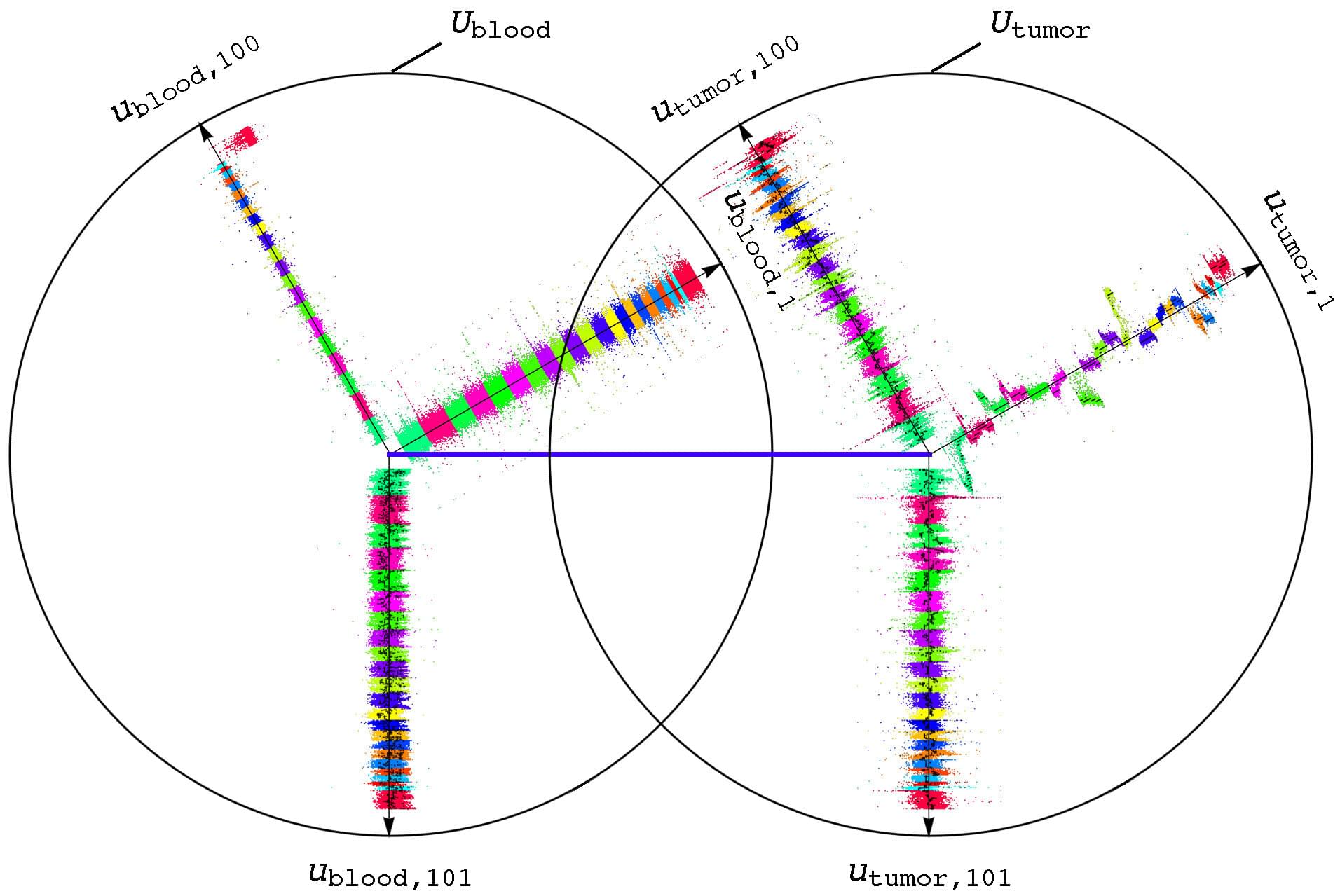
For a child diagnosed with neuroblastoma—the most common infant cancer, occurring when early nerve cells grow out of control—the path to treatment isn’t simple. Some types of neuroblastoma resolve on their own, while others require aggressive intervention. Researchers have tried matching treatments to patients based on one-gene mutations with limited success. This is because patients’ outcomes depend on their entire molecular background, containing millions or even billions of features, such as DNA and RNA from tissues and blood.
“It’s much more than just one gene—everything that’s happening in the cells of the patient matters,” said Orly Alter, an associate professor of biomedical engineering at the University of Utah’s Scientific Computing & Imaging Institute.
Current artificial intelligence and machine learning (AI/ML) approaches require massive amounts of training data and, specifically, vastly more patient samples than genetic features.