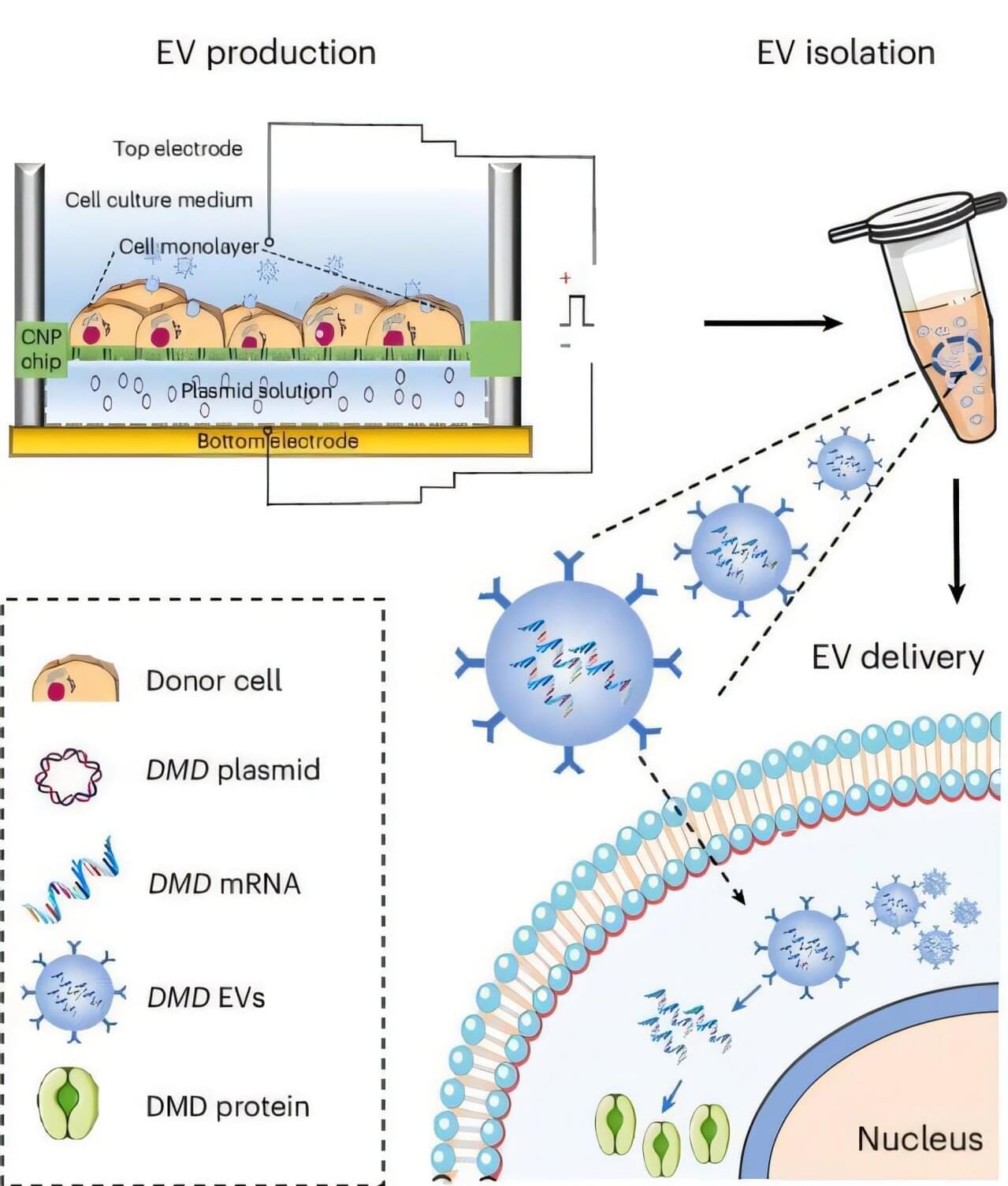
A new treatment platform developed by researchers at the University of Texas MD Anderson Cancer Center was able to deliver messenger RNA (mRNA) of the full-length DMD gene into preclinical models of Duchenne muscular dystrophy, successfully restoring the production of an important muscle protein, dystrophin, and dramatically improving muscle strength, endurance and function in vivo.
The study, published in Nature Biomedical Engineering, was co-led by Betty Kim, M.D., Ph.D., professor of neurosurgery and core member of the James P. Allison Institute, and Wen Jiang, M.D., Ph.D., associate professor of CNS Radiation Oncology.
The approach uses engineered extracellular vesicles (EVs)—natural nanoscale delivery particles—that offer distinct benefits over current viral-based gene therapies, including reduced side effects and the ability to transfer the entire DMD gene. The researchers engineered the EVs with special tags that directly target skeletal muscles after injection into the bloodstream.