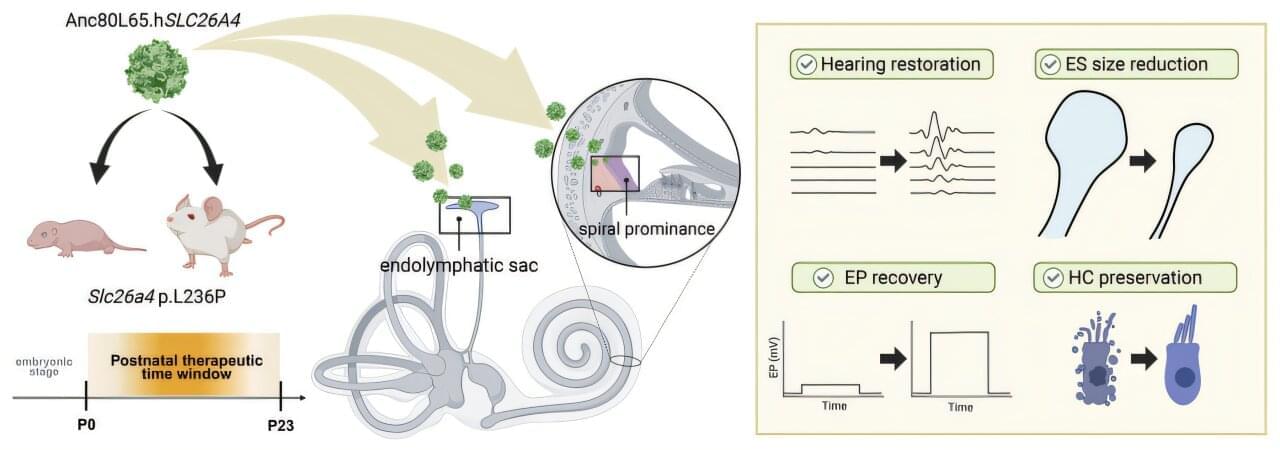
Hereditary hearing loss affects millions globally, with mutations in the SLC26A4 gene among the most common genetic triggers, particularly across Asian populations. This condition leads to severe-to-profound deafness accompanied by inner ear malformations, such as an abnormally enlarged vestibular aqueduct and endolymphatic sac.
While gene replacement therapies have long held immense potential, experimental interventions have historically been restricted to the embryonic stage. Delivering genetic material before birth presents steep ethical and practical hurdles, creating a critical roadblock for real-world medical applications.