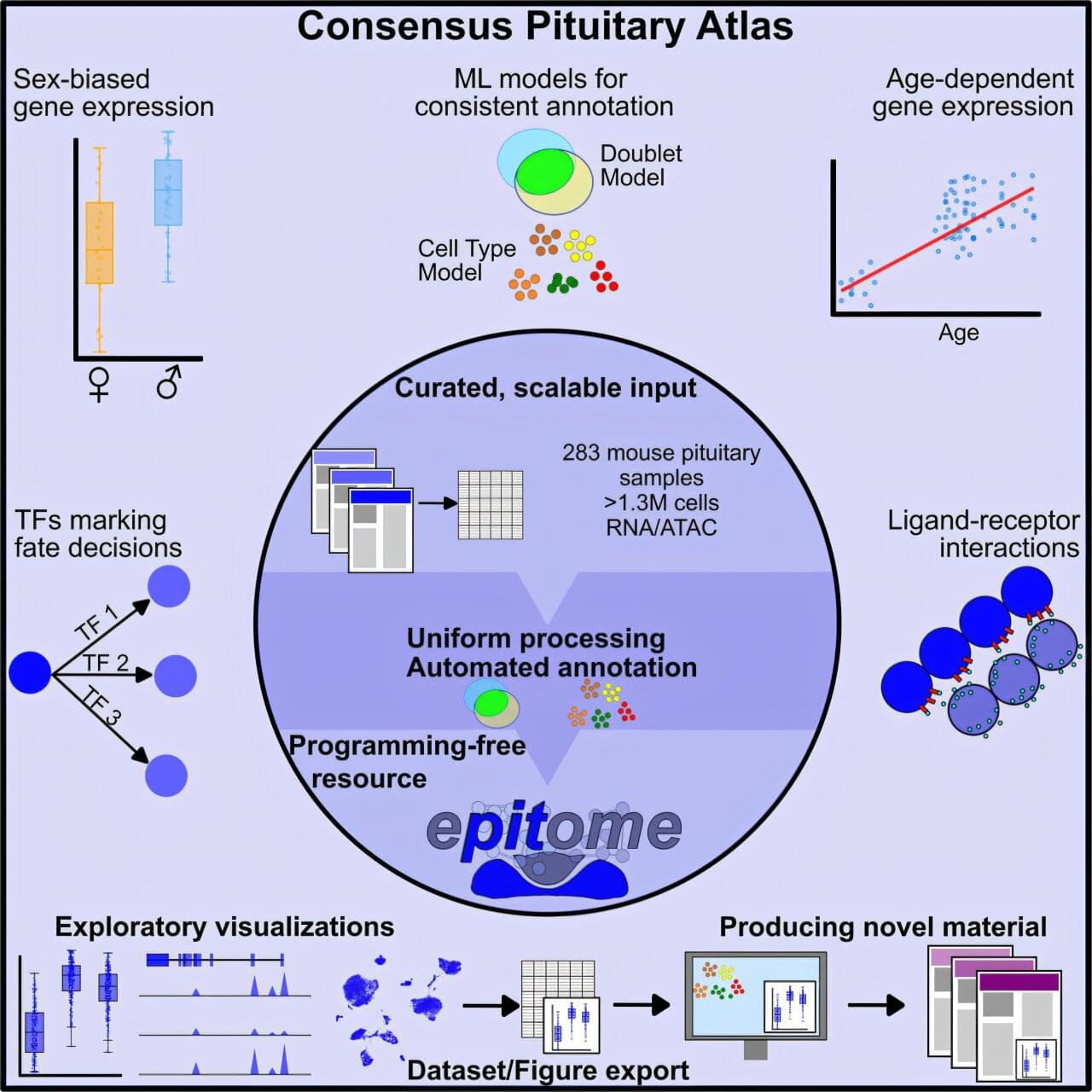
A new study has created a detailed map of the pituitary gland, often called the body’s “master gland” because it controls important functions such as growth, stress and reproduction. Researchers from the Center for Craniofacial & Regenerative Biology combined data from many studies to build a single, clearer picture of how this gland works. They created the Consensus Pituitary Atlas, along with an easy-to-use website where scientists can explore the data and analyze their own.
Over the past 10 years, scientists have used a method called single-cell RNA sequencing to measure how genes work in individual cells. This method has also been used to study the pituitary gland. Since 2018, researchers have collected data from 1.3 million pituitary cells across nearly 40 studies.
However, these studies were often small, used only a few animals, usually male, followed different analysis methods, and employed inconsistent naming conventions for cell types. This made results hard to compare and sometimes unreliable.