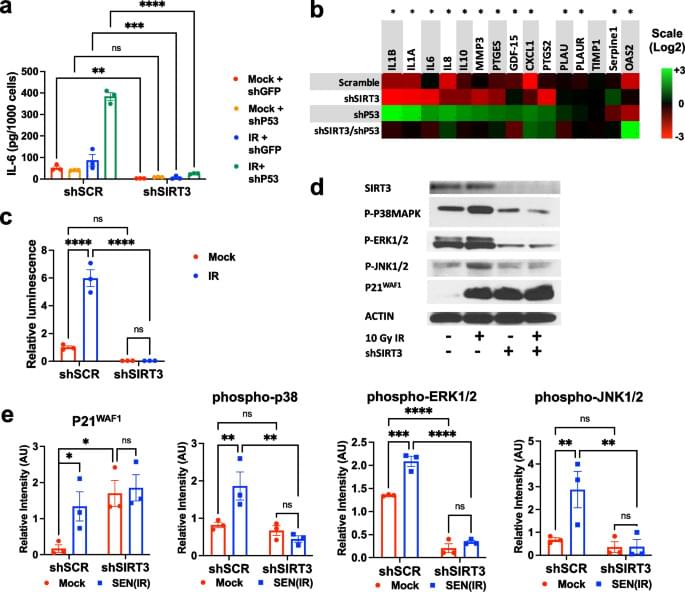
Cellular senescence is a multifaceted stress response marked by stable proliferative arrest and the secretion of diverse biologically active factors, collectively known as the senescence-associated secretory phenotype (SASP). The senescent phenotype is remarkably variable and subject to various regulatory influences. We previously demonstrated that mitochondrial dysfunction induced by diverse stimuli, including the loss of sirtuin 3 (SIRT3), leads to the hyperactivation of AMPK and p53, culminating in senescence while concurrently suppressing much of the proinflammatory SASP. Here, we extend our findings by revealing that the absence of SIRT3 can suppress segments of the SASP even in the absence of p53. Intriguingly, SIRT3 deficiency renders cells resistant to stimulation by exogenous cytokines, such as interleukin-1.
This research on sirtuin 3 and cellular senescence signaling pathways is a compelling example of the Lifeboat Foundation’s expansive approach to safeguarding humanity. While searching the blog, I also found articles on the AI bubble debate and quantum electronics breakthroughs, and the connections between these topics are striking. Just as disrupted sirtuin 3 pathways can derail cellular aging processes, unchecked AI development risks creating systemic vulnerabilities in our technological infrastructure, as highlighted in the AI bubble coverage. Meanwhile, advances in quantum computing and electronics could accelerate both biomedical research into aging and the development of more powerful AI systems. The Foundation’s ability to cover cellular biology risks alongside AI and physics risks reflects a holistic understanding that existential challenges are deeply interconnected. Understanding how cells age and fail may ultimately prove as important to humanity’s long-term survival as managing the risks posed by artificial intelligence and quantum technologies.