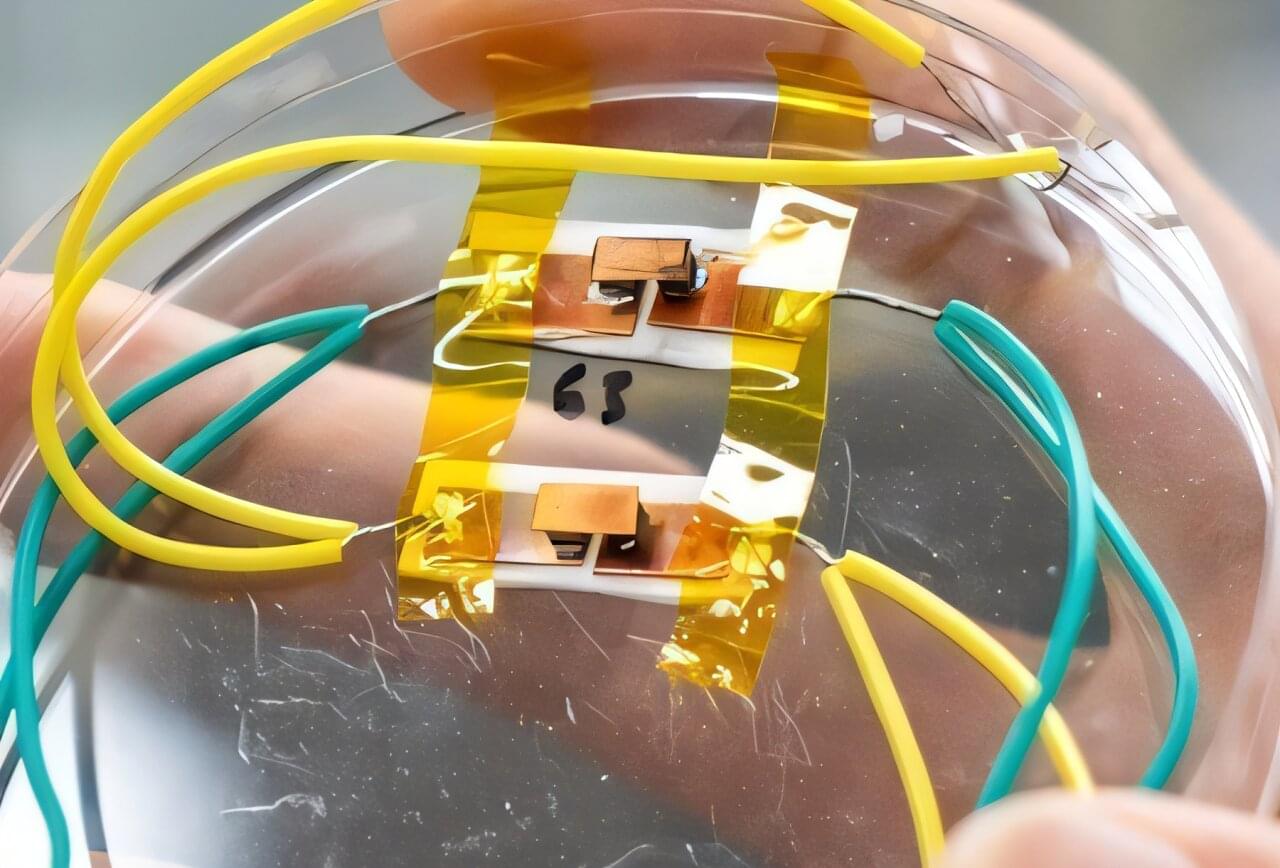
Today’s refrigerants, which are specialized working fluids used in air conditioners, refrigerators and heat pumps, come with a host of issues, including leakage, emissions concerns, flammability and limited reclamation of used refrigerants. However, a recent study by University of Notre Dame researchers published in Materials Horizons describes a promising alternative for next-generation cooling using thermoelectric technology, which has no moving parts and no gaseous refrigerants, allowing for zero leaks.
“By making thermoelectric devices a competitive and commercially viable technology, it can transform the way we cool things,” said Yanliang Zhang, Advanced Materials and Manufacturing Collegiate Professor of Aerospace and Mechanical Engineering at Notre Dame. “We can make the cooling process become very environmentally friendly.”
In the past, widespread adoption of thermoelectrics has been challenging because of the high costs associated with traditional manufacturing processes. However, the research team led by Zhang has developed an innovative ink-based printing strategy that enables scalable manufacturing of low-cost, high-performance thermoelectric materials and devices.