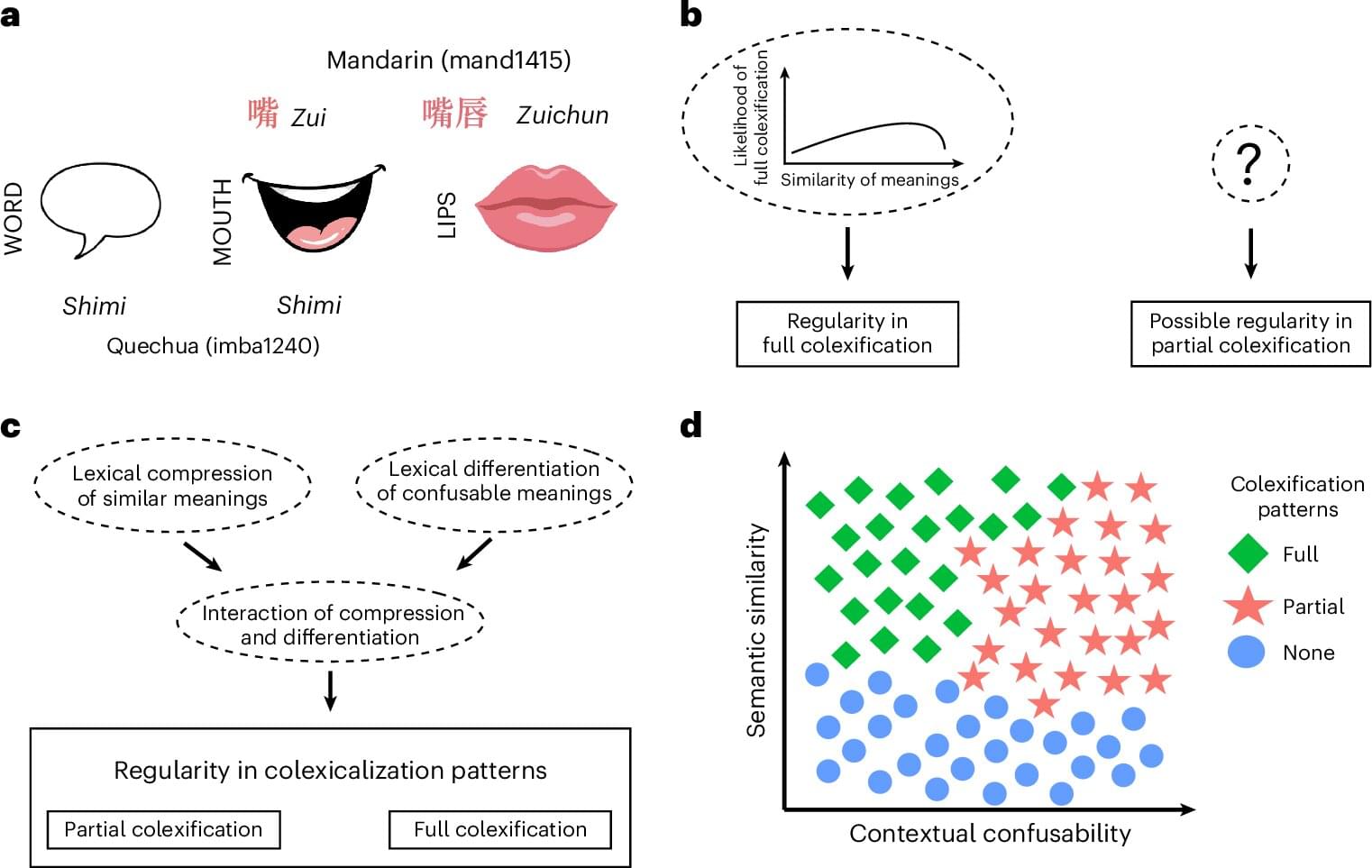
Many languages recycle words, giving them different meanings. For example, in English, “run” can mean to move quickly but also to manage something, like “run a company.” In Spanish, “lengua” is both the word for tongue and language, as in “la lengua española.” This type of word reuse is known as colexification.
But there is another type of recycling, and that is partial colexification, where languages reuse only parts of words. A good example is the word “grand,” which is shared in “grandfather” and “grandmother.” Until now, very little was known about the rules, patterns and how widespread this type of recycling is across different languages.
A new study published in the journal Nature Human Behaviour explores how different languages systematically reuse these smaller word parts while balancing efficiency with the need to keep meanings distinct. Barend Beekhuizen at the Department of Language Studies at the University of Toronto Mississauga in Canada has published a News & Views piece on the research in the same journal.