Metal cluster molecules are discrete compounds containing multiple metal atoms held together by metal–metal and metal–ligand bonding. They serve as excellent candidates for catalysts, biosensors, and even for drug development. Developing atomic-level molecular editing methods for such metal clusters remains an important challenge and represents a promising strategy for expanding their structural and functional diversity. Such approaches can enable structure-specific properties, high near-infrared (NIR) photoluminescence quantum yields, and unique reactivities and electronic structures.
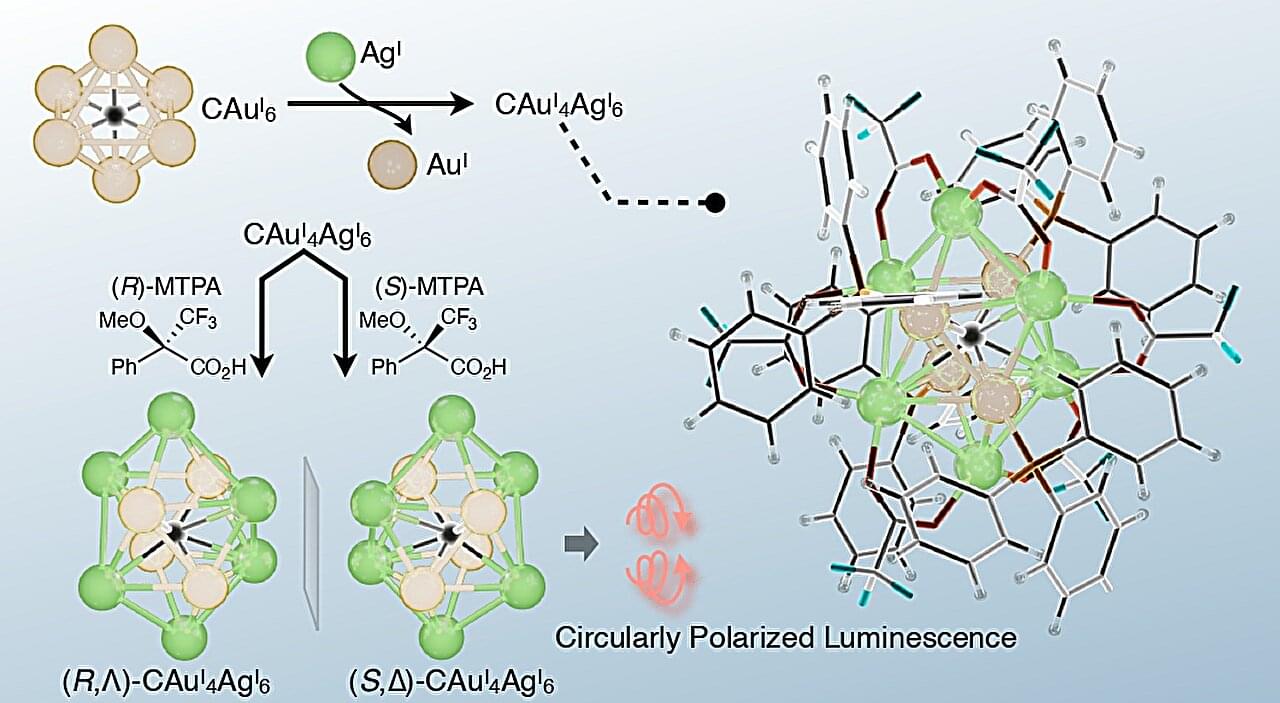
Alloying is a powerful method for achieving this goal. In this regard, a key challenge is asymmetric alloying, which introduces asymmetry into the metal cluster by selectively placing heterometal atoms at nonequivalent sites, desymmetrizing the cluster and therefore imparting chirality-associated functionality.
Moreover, highly selective asymmetric synthesis methods for heterometallic clusters are expected to contribute significantly to the development of chiroptical materials. However, methods capable of achieving such controlled asymmetric synthesis have rarely been reported.