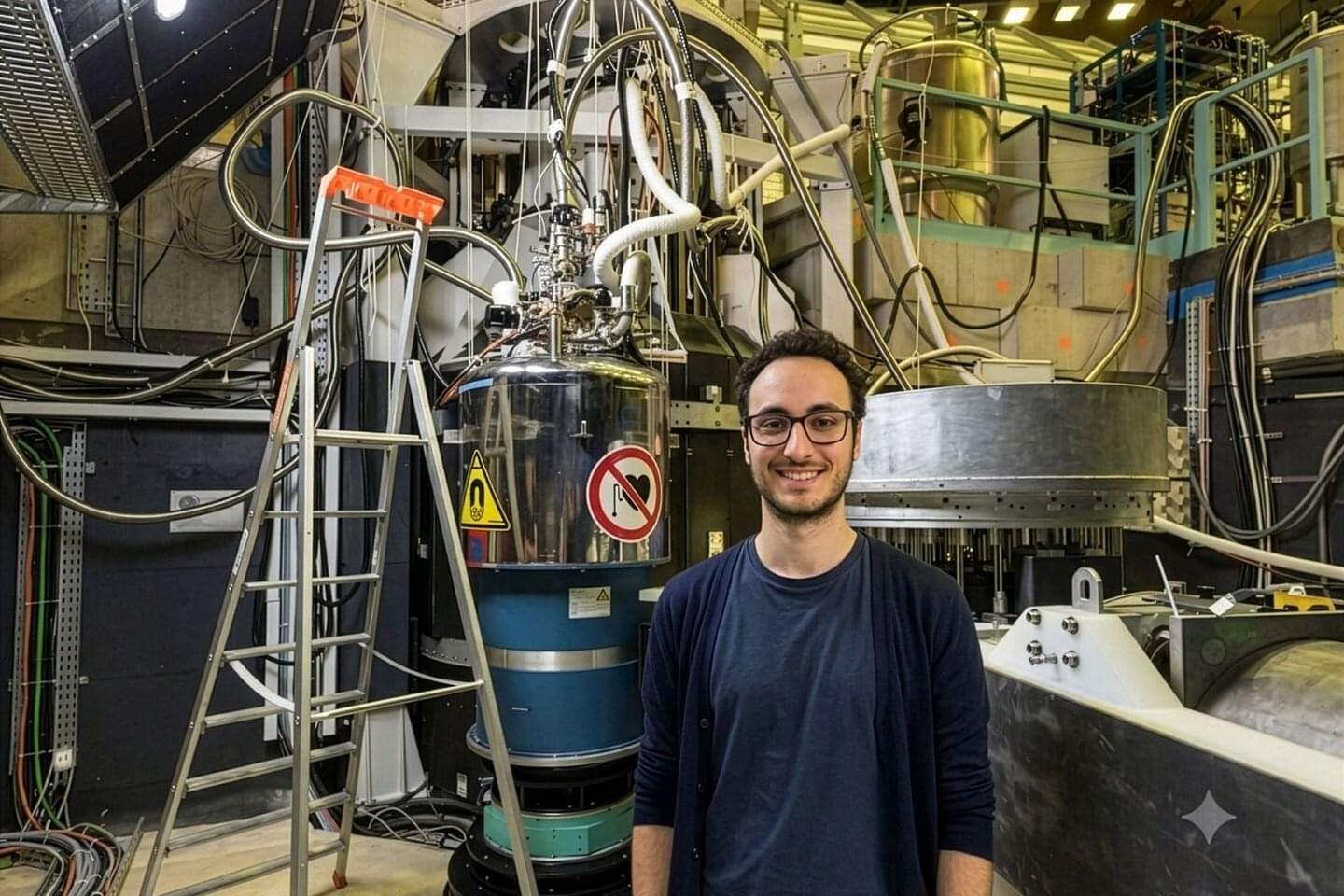
Many quantum effects can be observed only when a small number of particles is studied—individual atoms, molecules or photons, for example, carefully shielded from the rest of the world. But what about macroscopic objects, consisting of an unimaginably large number of particles? Can they, too, display effects that provide a direct glimpse into the quantum world?
Experimentalists at TU Wien have now shown that this is possible: A centimeter-sized crystal of a so-called strange metal was investigated, and a high degree of quantum entanglement was detected. This was made possible by a clearly defined method from quantum information theory: the quantum Fisher information.
It establishes a new bridge between solid-state physics and quantum physics: Quantum entanglement can be directly quantified in a macroscopic strange-metal material. The paper is published in the journal Nature Physics.