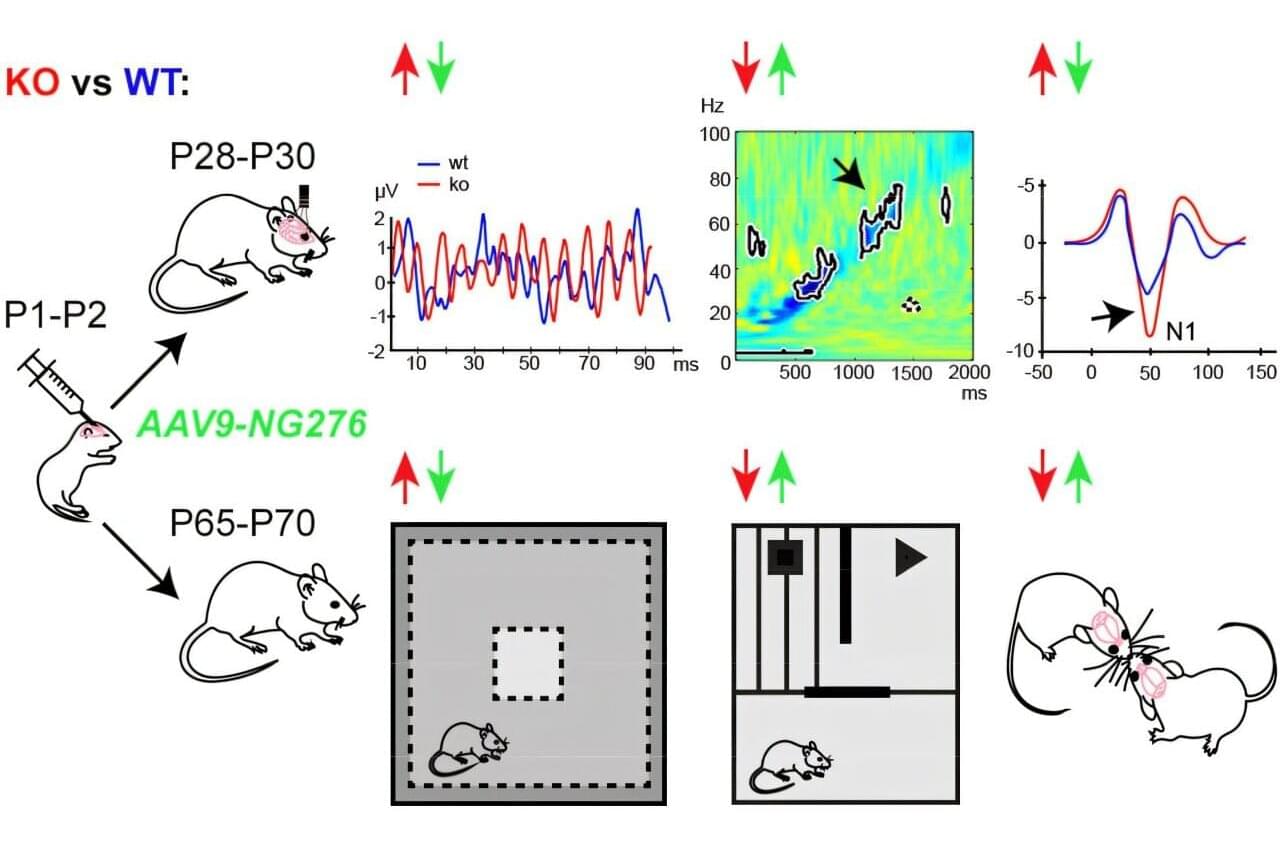
A gene therapy designed to replace a missing brain protein restored normal brain activity and improved behavior in a mouse model of fragile X syndrome (FXS), according to a study led by researchers at the University of California, Riverside. The findings, published in Molecular Therapy Nucleic Acids, suggest that gene therapy may one day address the underlying cause of FXS rather than simply treating its symptoms.
FXS affects approximately 2–3% of individuals diagnosed with autism and is one of the best-defined genetic causes of neurodevelopmental disability. The condition occurs when a mutation in the FMR1 gene prevents the production of fragile X messenger ribonucleoprotein (FMRP), a protein that regulates communication between brain cells.
“In a typical brain, FMRP acts like a brake or a volume control,” said Iryna Ethell, the paper’s senior author and a professor of biomedical sciences in the UCR School of Medicine. “Without it, neural circuits become overactive and less efficient, which contributes to many of the developmental and behavioral challenges associated with FXS.”