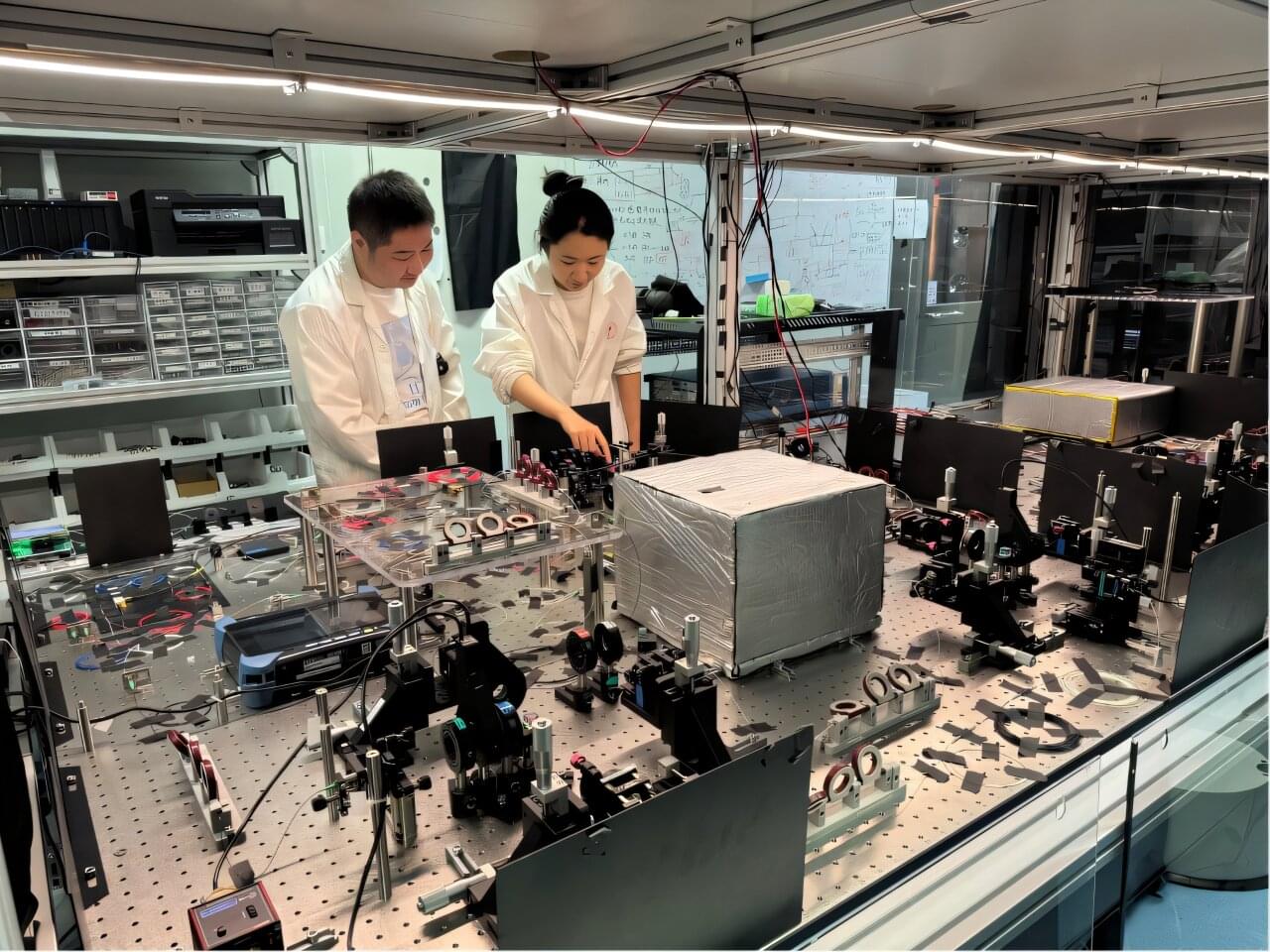
Physicists in China have observed five phases in localization physics within a single quantum system. Using an advanced photonic platform, the team, led by Yucheng Wang and Jingyun Fan at the Southern University of Science and Technology, Shenzhen, has demonstrated that localization physics is likely far richer than physicists anticipated. Their results have been published in Physical Review Letters.
In 1958, American physicist Philip Anderson made the foundational discovery that disordered media are better at trapping waves than orderly lattice structures. Described mathematically by “localization phases,” this phenomenon now underpins our understanding of both condensed matter and wave physics.
So far, theory has distinguished between two distinct localization phases: one exhibiting “extended” states, which support wave transport, and the other associated with “localized” states, which suppress it. Yet through recent theoretical work, physicists uncovered a third distinct phase, named the “critical phase.”