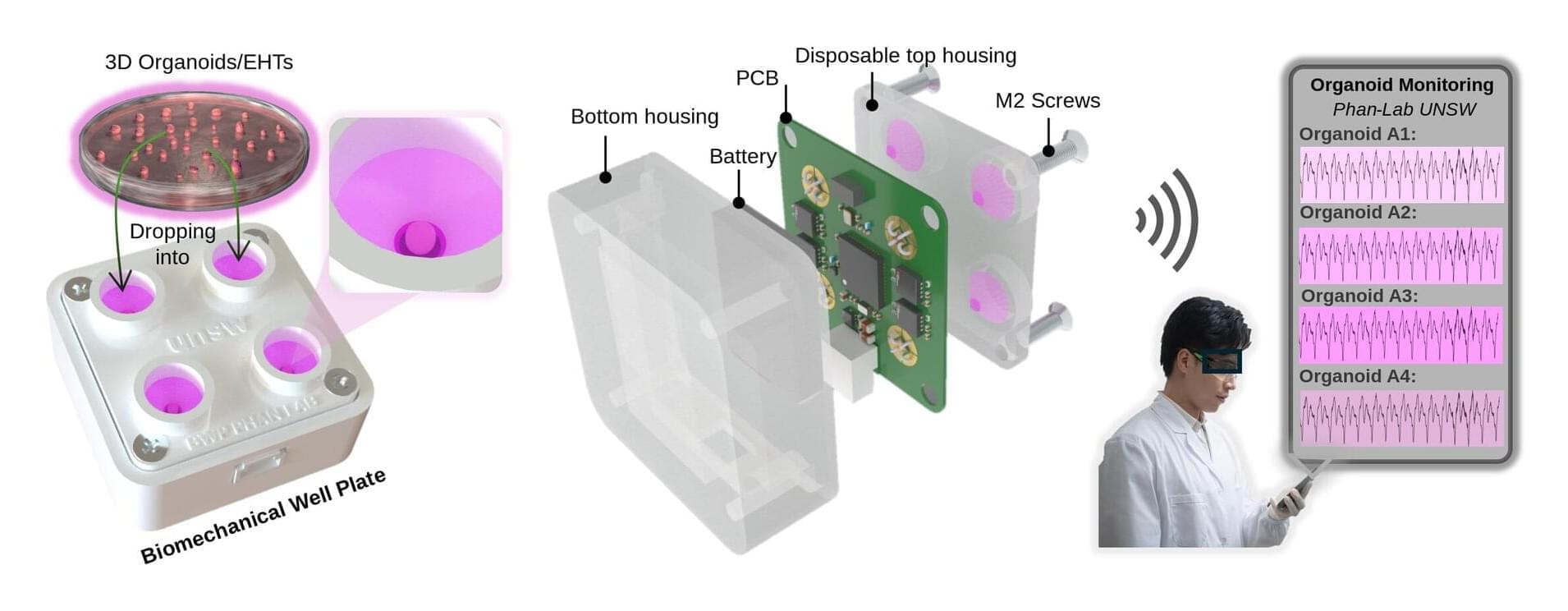
Engineers have developed a new way to monitor how tiny lab-grown human heart tissues beat—by effectively “listening” to the ripples they create. The team has created a wireless, noninvasive sensing platform that can biomechanically measure how strongly the miniature heart tissues, known as cardiac organoids, beat in real time. The research could help accelerate drug development, improve disease modeling and reduce reliance on animal testing, offering a more human-relevant way to study how the heart works.
Cardiac organoids are 3D clusters of human heart cells grown in a laboratory that are used to evaluate the safety and efficacy of new drugs prior to clinical trials, as well as study disease. While they don’t replicate the full structure of a human heart, they mimic key behaviors, especially how heart muscles contract when drugs are administered.
They are increasingly seen as a powerful alternative to animal models, which often fail to fully capture how human biology works.