Many natural processes, ranging from magnetism to chemical reactions, entail the movement and rotation of particles at very small scales. In quantum mechanics, particles exhibit both particle-like and wave-like behaviors, and their states can be described mathematically using representations known as wavefunctions.
The reliable manipulation of wave-like properties of particles as small as atoms or single electrons could open new possibilities both for studying matter and for engineering materials with desirable characteristics. Notably, controlling the angular momentum, which is the quantum property related to rotational motion, of ultrasmall particles at ultrafast timescales has so far proved very challenging when only using conventional, laser-based approaches.
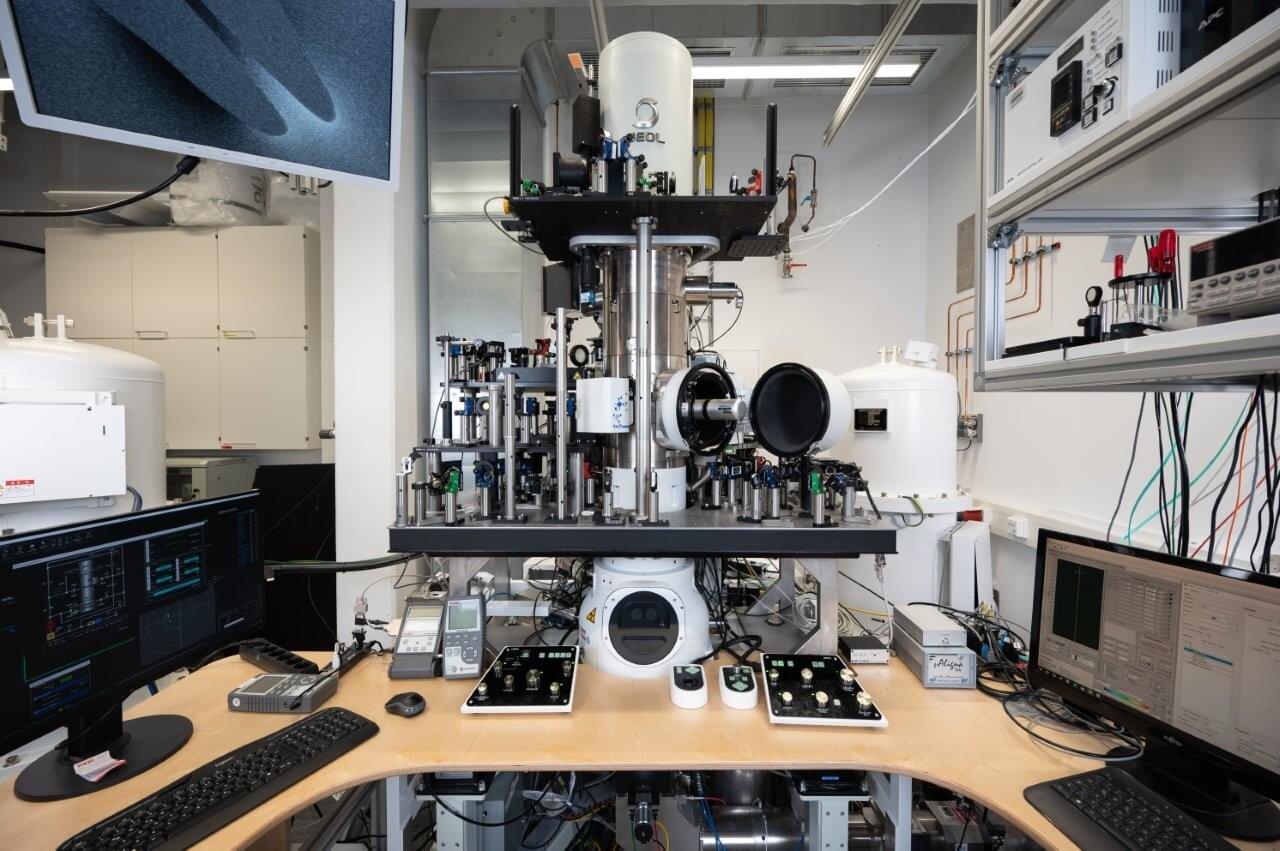
Researchers at Universität Konstanz recently devised a new approach to create electron beams with an ultrafast internal torque (i.e., twisting motion). Their proposed strategy, outlined in a paper published in Nature Physics, could be a promising tool for exploring material dynamics and quantum phenomena at atomic and subatomic scales.