Periodontal (gum) disease is one of the most prevalent diseases worldwide, caused by the bacterium Porphyromonas gingivalis (P. gingivalis). In Japan alone, approximately 80% of adults 30 and older are affected or considered at risk.
Published in Communications Biology, a joint study by the Okinawa Institute of Science and Technology (OIST), Tottori University, Hiroshima University and Nagasaki University provides new insights into how this bacterium causes plaque formation.
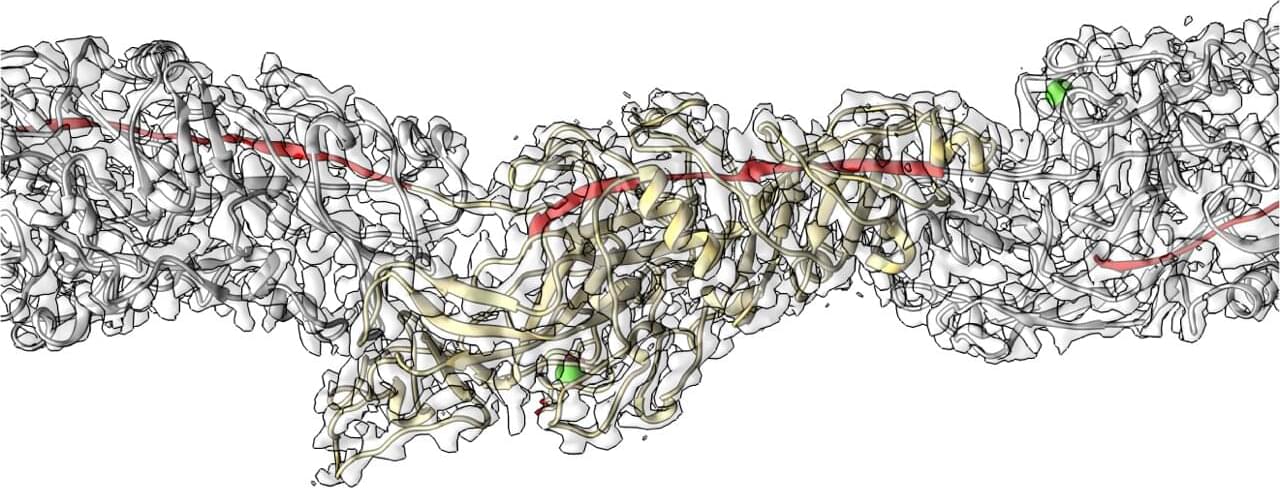
Using cryo-electron microscopy (cryo-EM), the researchers reveal the 3D structure of Mfa pili, an arm-like filament that enables the bacteria to stick to host tissues and other microbes.