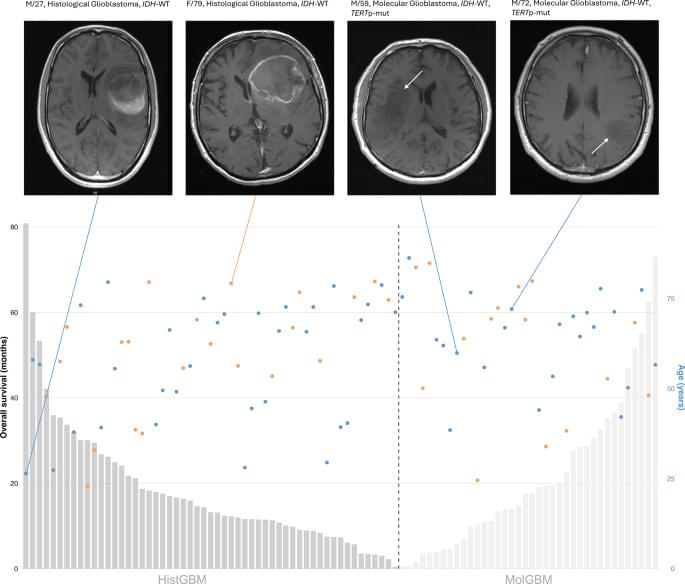
This study compares clinical characteristics and survival between molecular (MolGBM) and histological IDH-wild-type (IDH-WT) glioblastoma (HistGBM), and further characterizes histological lower-grade IDH-WT astrocytic tumors without genomic GBM-defining alterations.
Adult patients with histologically lower-grade IDH–WT astrocytoma (WHO grade 2–3) and available tumor tissue were included. Tumors were classified according to the 2021 WHO Classification of CNS tumors. Biopsy-only cases were excluded. IDH1 and TERT promoter (TERTp) mutations were analyzed via Sanger and whole-exome sequencing (WES). TERTp-WT tumors underwent WES and subsequent DNA methylation profiling. Clinical, molecular, and outcome data were collected.
The cohort comprised 47 surgically resected histologically lower-grade IDH-WT astrocytic tumors. Thirty-nine fulfilled WHO 2021 criteria for MolGBM, mainly based on TERTp mutation (n = 36), while eight lacked GBM-defining molecular alterations. Compared with HistGBM (n = 54), MolGBM more frequently presented with seizures and showed a lower Ki-67 index. Median overall survival (OS) was 19.8 months in MolGBM and 14.6 months in HistGBM, without a significant difference in univariable analysis (p = 0.11). Patients aged ≥ 60 years showed longer overall survival in the MolGBM group (17.9 vs. 12.3 months; p = 0.0079). In multivariable Cox regression adjusted for age, extent of resection, and completion of the Stupp regimen, MolGBM was independently associated with more favorable OS (HR 0.40, 95% CI 0.24–0.67, p = 0.0005). The eight tumors lacking GBM-defining alterations showed longer survival and marked diagnostic heterogeneity.