For every action, there is an equal and opposite reaction. What goes up must come down. Physical laws like these govern all of the natural world—except for the tiny internal components of today’s microprocessors, which operate according to the unique and complicated rules of quantum physics.
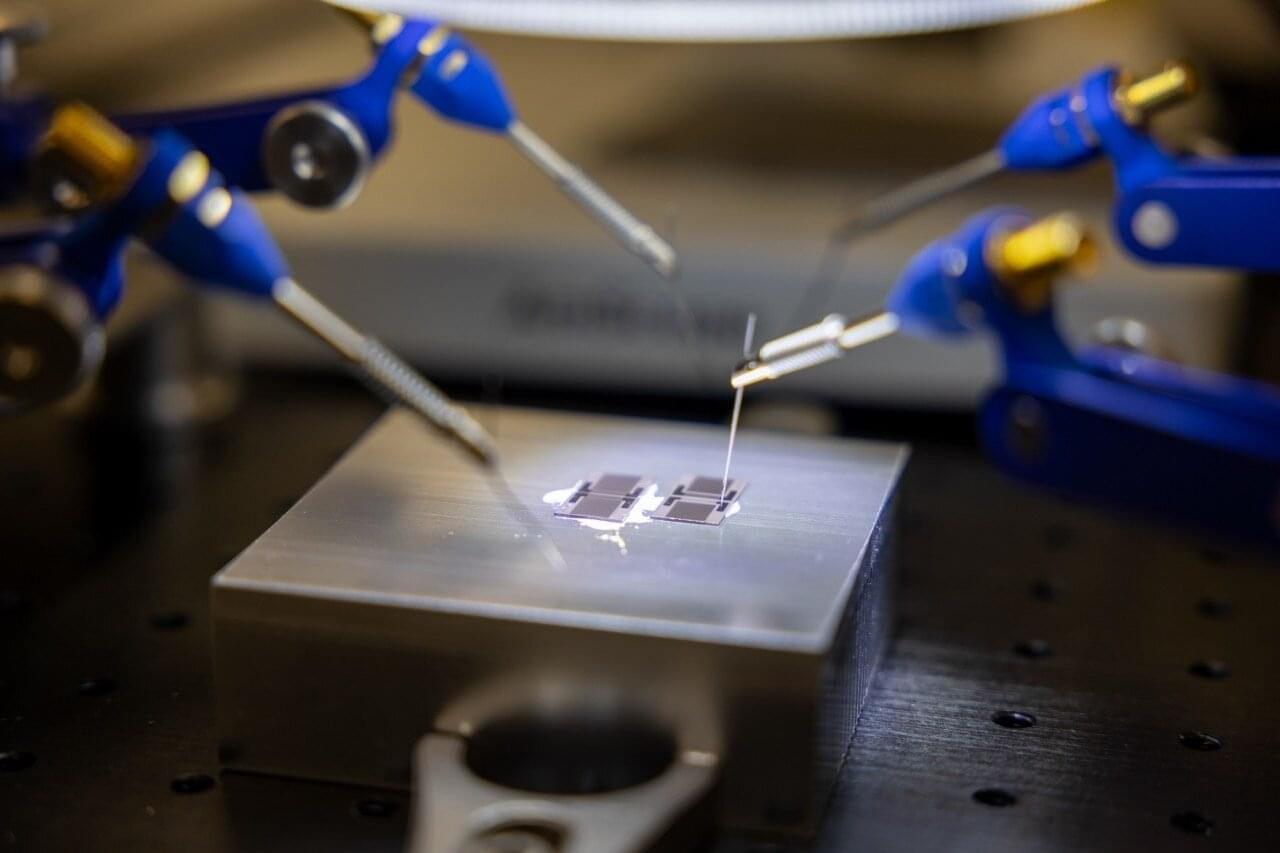
As the microprocessors that power computers, medical equipment, sensors, and more continue to shrink in size, engineers face challenges controlling quantum-scale systems. But in a step forward for the technology, researchers at Virginia Tech have developed an “acoustic atom”—a chip-scale device that traps and controls sound waves in ways that mimic the behavior of real atoms. Long term, these advances could influence technologies connected to quantum artificial intelligence (AI), telecommunication, medical imaging, GPS, and more.
The research is published in Physical Review Letters by Linbo Shao, assistant professor in Virginia Tech’s Bradley Department of Electrical and Computer Engineering, along with colleagues at the university’s Center for Power Electronic Systems, Department of Physics, and Center for Quantum Information Science and Engineering and the Oak Ridge National Laboratory.