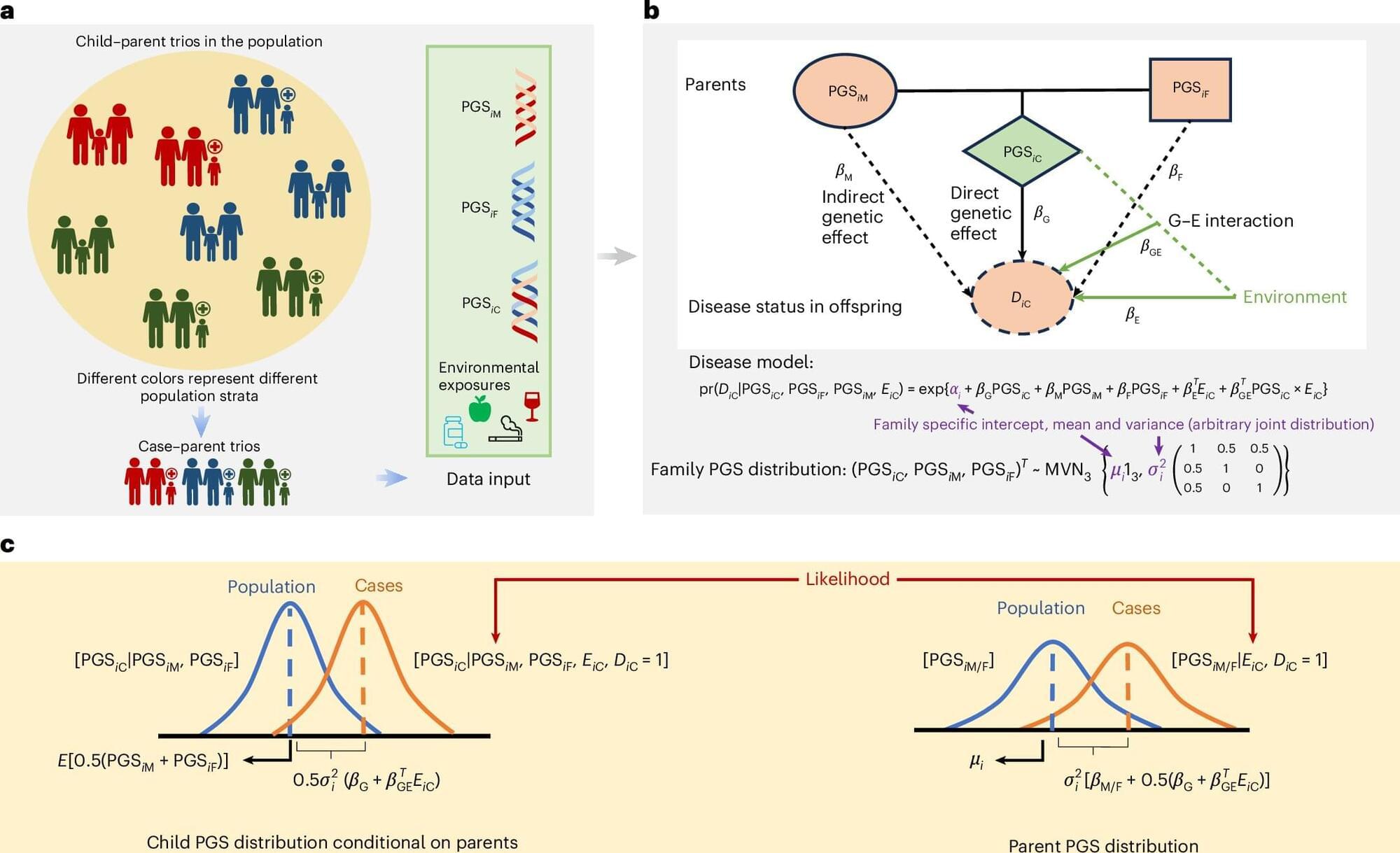
A new statistical framework developed by researchers at the Johns Hopkins Bloomberg School of Public Health, Johns Hopkins University School of Medicine, and Kaiser Permanente Northern California offers improved understanding of how genetics and environment contribute to autism risk.
Large-scale genetic studies have led to the development of genetic risk scores that estimate a person’s predisposition to diseases and health conditions based on their DNA profiles. The new framework allows researchers and clinicians to analyze these scores using family data and characterize the risk of conditions such as autism and other developmental conditions in children based on their own DNA, parental factors, and environmental influences such as maternal diet and lifestyle.
For their study published in Nature Genetics, the researchers analyzed more than 18,000 case-parent trios —autistic children and their parents—across diverse ancestral populations in the Simons Foundation Powering Autism Research for Knowledge consortium and the Genes and Environment Autism Research Study.