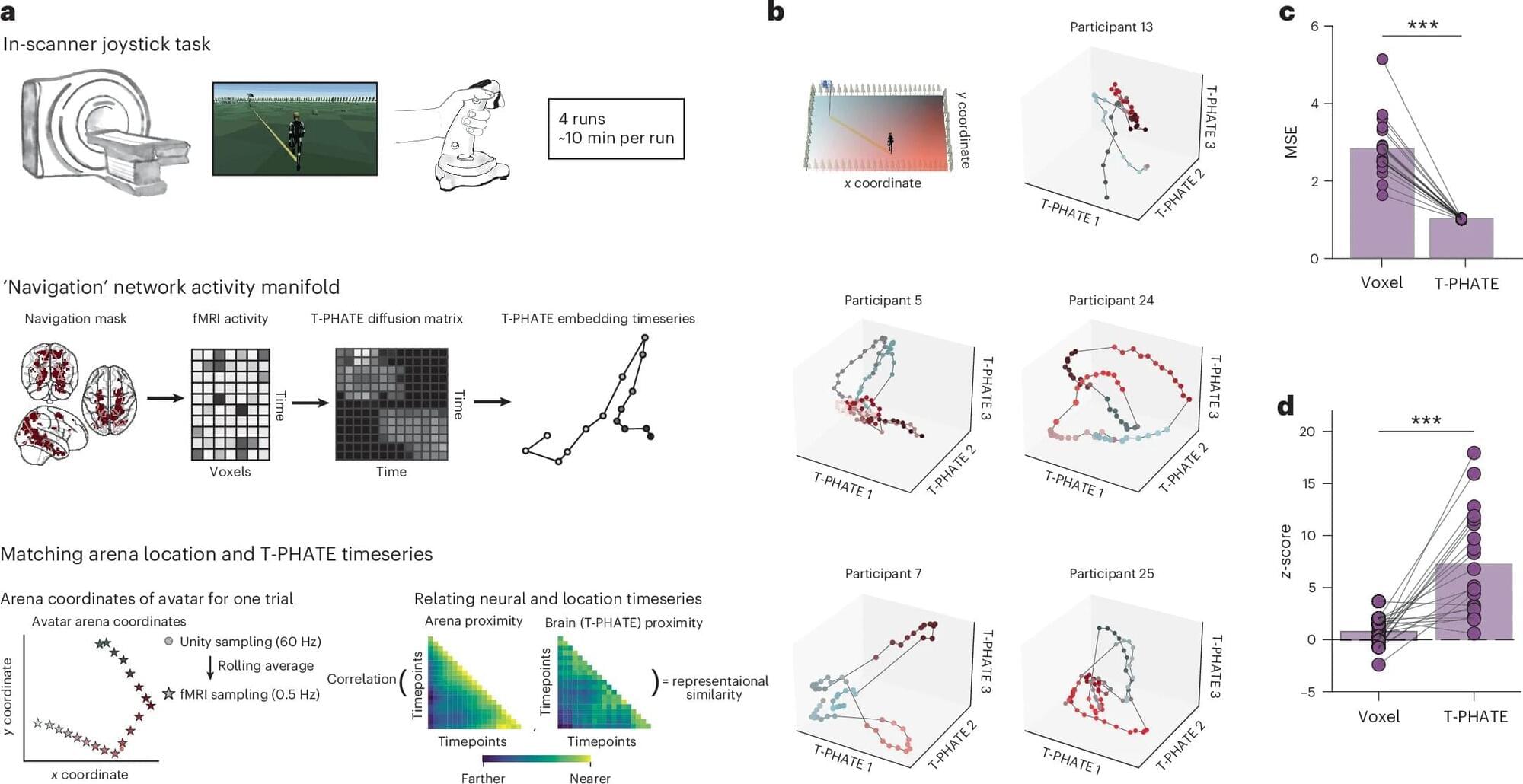
It might soon be “game over” for the video game controller. Yale researchers have developed a new kind of brain-computer interface (BCI) that lets humans play video games directly with their brains. Using real-time fMRI (functional MRI), they confirmed that the technology could help humans control a computer with their brain activity in a highly efficient way. The study appears in the journal Nature Neuroscience.
A BCI is technology that allows a human to control a computer with brain activity. Historically, they have not been effective. BCIs built using real-time neurofeedback from fMRI—a type of MRI scan showing which areas of the brain are most active over time—require up to 10 long training sessions per person, and even then the learning effects are modest. About a third of users never gain control, regardless of how many hours they practice.
A huge problem for the use of BCIs is our limited ability to concentrate our attention to a single mental job.
Usually we can use BCIs only for short session of several minutes.
Therefore we can say, that BCI can be used only for short experiments — but not permanent use.
Additional such experiments are performed in laboratories where a lot of scientists are responsible for the experiments.
To be alone at home with a BCI will create mistakes