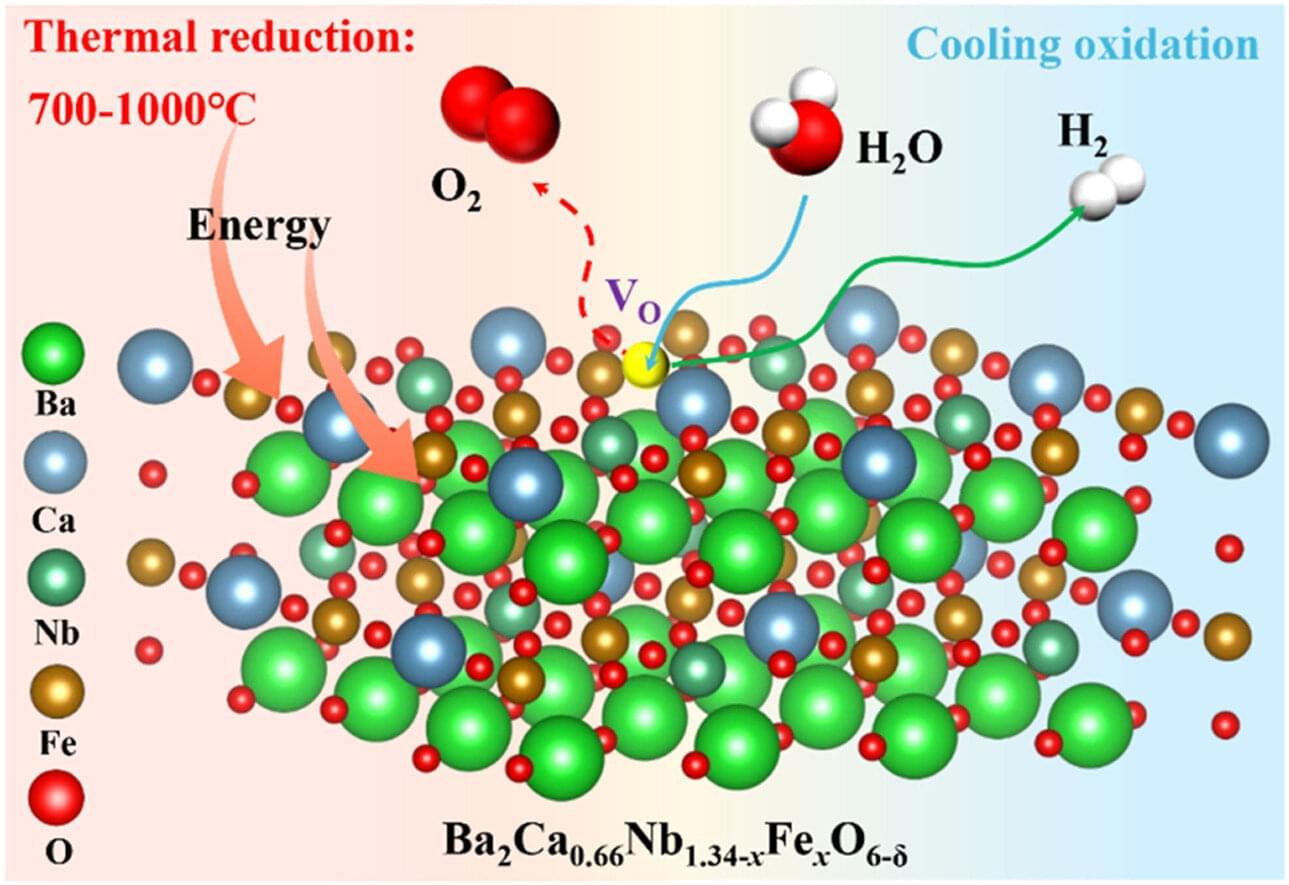
University of Birmingham research published today has shown a new low-temperature method for producing hydrogen that is suitable for both centralized hydrogen production, and also local generation using waste heat from large-scale industrial plants.
Hydrogen is the most abundant element in the universe and is a clean and environmentally friendly energy carrier. Unlike fossil fuels, which produce harmful emissions and carbon dioxide, it produces only heat and water on combustion and can also power fuel cells that produce electricity. But while hydrogen is carbon-free at the point of use, 95% of current production relies on fossil fuels.
Thermochemical splitting, where a catalyst splits water into hydrogen and oxygen, is emerging as a promising method for hydrogen production. However, current catalysts split water at 700‑1000oC and need temperatures between 1,300 and 1500oC to regenerate between cycles of water-splitting.