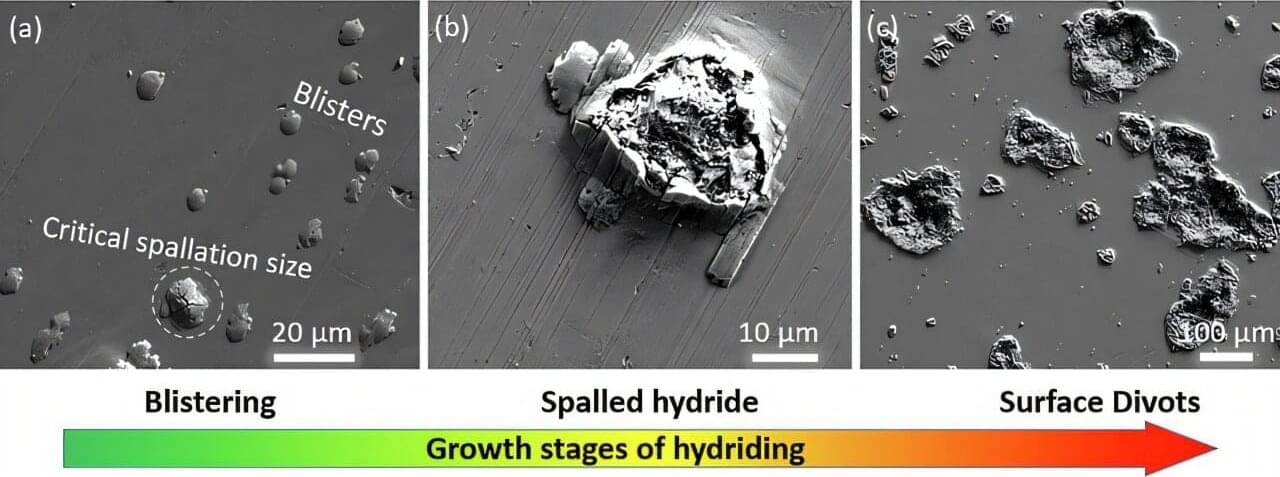
When hydrogen gas interacts with uranium metal, the combination creates a chemically reactive powder and a runaway reaction that is difficult to stop. The result can impact the safety and lifespan of technology critical for fusion energy, hydrogen storage and nuclear fuels.
In a recent study published in npj Materials Degradation, researchers from Lawrence Livermore National Laboratory (LLNL) observed and characterized the beginning stages of hydrogen-uranium corrosion for the first time. The result will lead to more predictive and physically grounded models for how uranium components degrade.
Imagine the hydrogen-uranium interaction like a geyser. Much like surface water seeping through cracks to make its way underground, hydrogen dissolves and diffuses into the uranium metal. This happens silently and invisibly until it becomes too much hydrogen for the uranium to hold. The two materials combine to form a new compound called uranium hydride, which takes up significantly more volume than the original uranium metal.