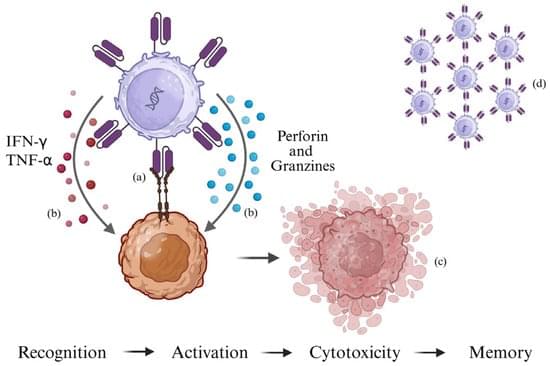
In recent years, the development of new immunotherapy strategies has been a significant breakthrough in cancer treatment. Among these, engineered T cell therapy with chimeric antigen receptors (CAR-T) has produced notable clinical results, especially in hematological malignancies. This success has sparked growing interest in extending the application of CAR-Ts to solid tumors, including gliomas. Gliomas—in particular, glioblastoma multiforme (GBM)—are among the most aggressive primary brain tumors, associated with a poor prognosis and a median survival of approximately one year after diagnosis. However, the translation of CAR-T therapy to gliomas presents significant challenges, related to factors such as tumor heterogeneity, presence of the blood–brain barrier (BBB), and a strongly immunosuppressive tumor environment.