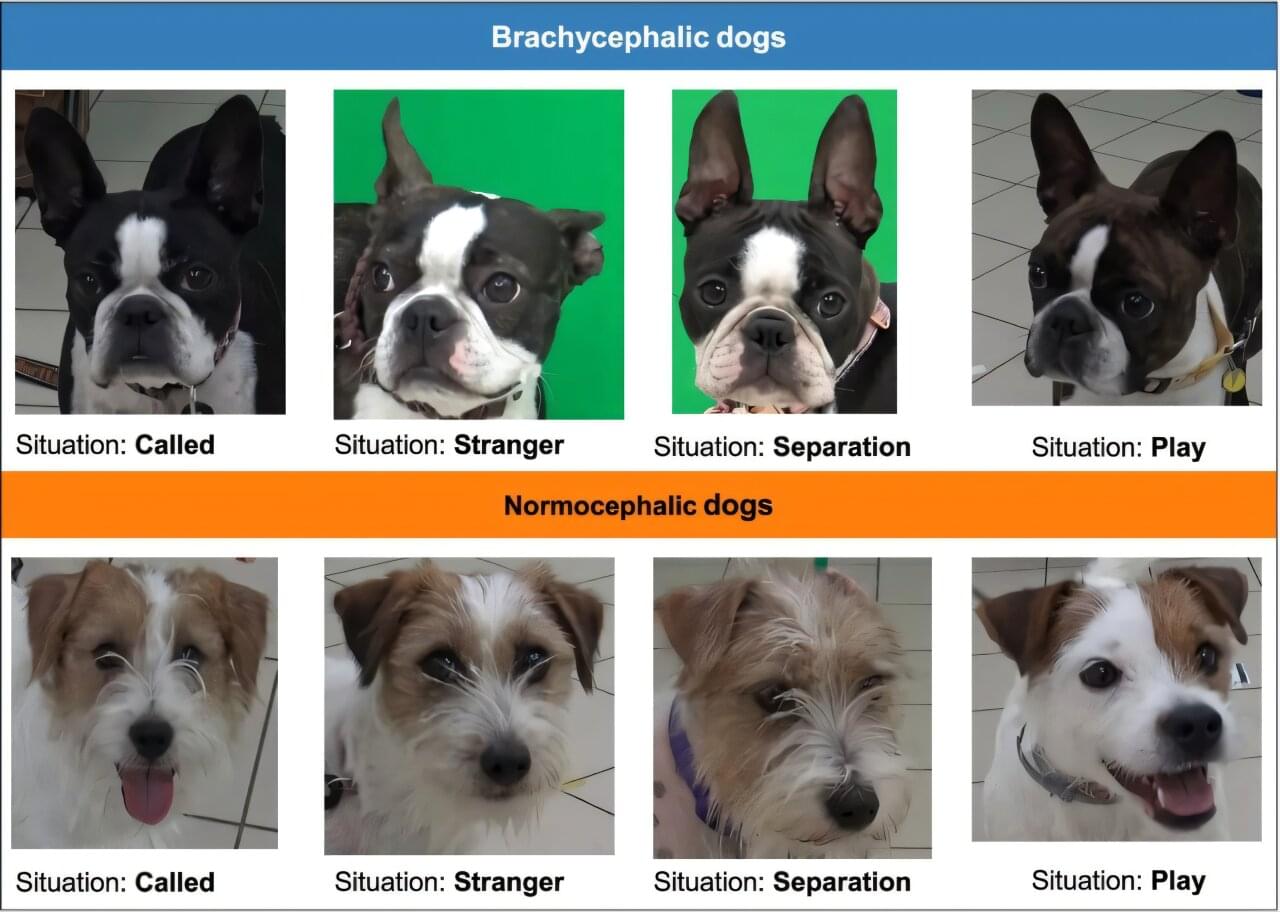
People often look to dogs’ behavior, especially their facial expressions, for indications of their states of mind. Numerous studies show that this is a popular interpretation strategy. However, modern dog breeds vary greatly in size and structure, and few studies have explored how breed-specific morphology might affect humans’ ability to assess visual cues from the faces of different breeds of dogs.
Now, for the first time, a collaborative research team including scientists from Israel, Czechia, and Hungary has used eye-tracking to compare the visual attention patterns of humans observing photographs of normocephalic and brachycephalic dogs. A research paper detailing the team’s findings appears in Frontiers in Veterinary Science.