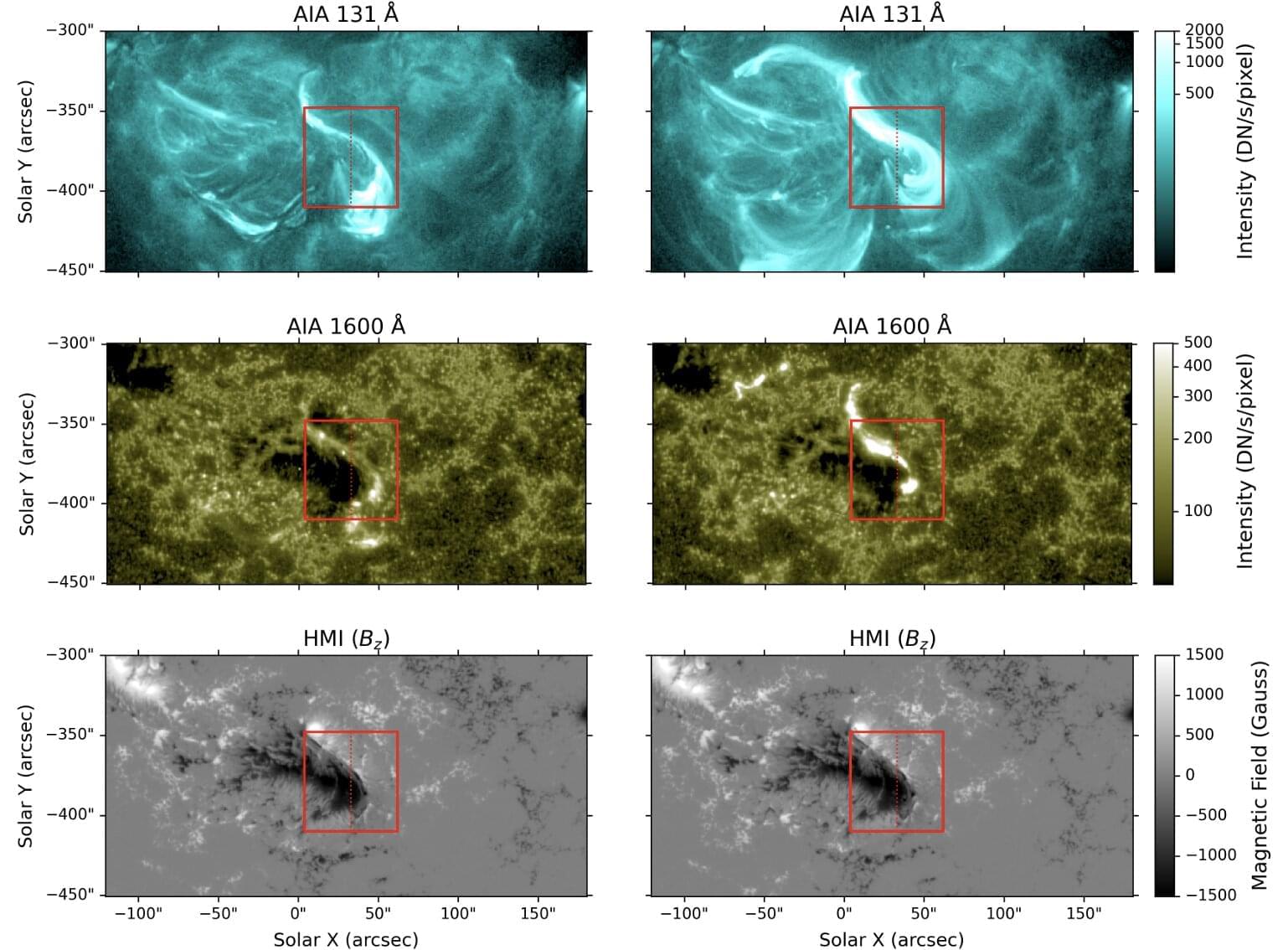
Solar flares are powerful bursts of radiation from the sun’s surface, which can wreak havoc on Earth’s power grids, damage orbiting satellites, and pose serious radiation risks to astronauts. Yet despite decades of study, the processes that trigger these eruptions remain poorly understood.
In a new preprint on arXiv, a team led by Louis Seyfritz at the New Jersey Institute of Technology has captured rare observations of a large flare in the hours before it erupted, offering new clues about what sets these events in motion.