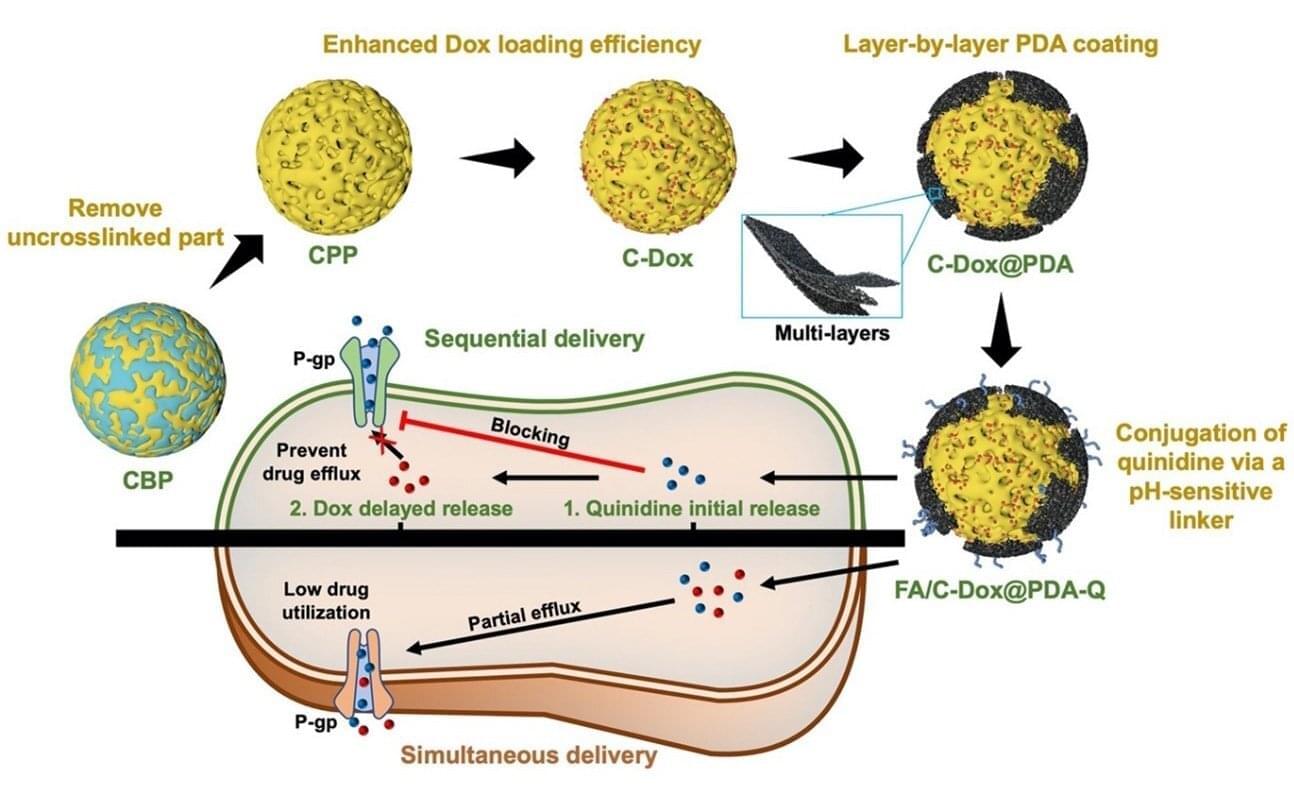
Cancer cells frequently develop the ability to expel anticancer drugs before they can work—a phenomenon called multidrug resistance (MDR)—which is one of the leading reasons why chemotherapy fails in patients. Research published in the Journal of Controlled Release addresses that problem with a fundamentally new strategy: instead of simply increasing drug doses or switching drugs, researchers engineered nanoparticles that first disable the cancer cell’s drug-expulsion mechanism, and only then release the anticancer drug.
By combining this sequential drug delivery approach with photothermal therapy (using near-infrared laser light to heat and destroy the tumor), complete tumor elimination and 100% survival in a mouse model of drug-resistant cancer were achieved, with no detectable toxicity to normal tissues.
This remarkable drug delivery system was developed by an international research team led by Professor Eijiro Miyako at Tohoku University, who is also a Visiting Professor at Japan Advanced Institute of Science and Technology, in collaboration with the group of Drs. Alberto Bianco and Cécilia Ménard-Moyon at the French National Center for Scientific Research (CNRS)/University of Strasbourg.