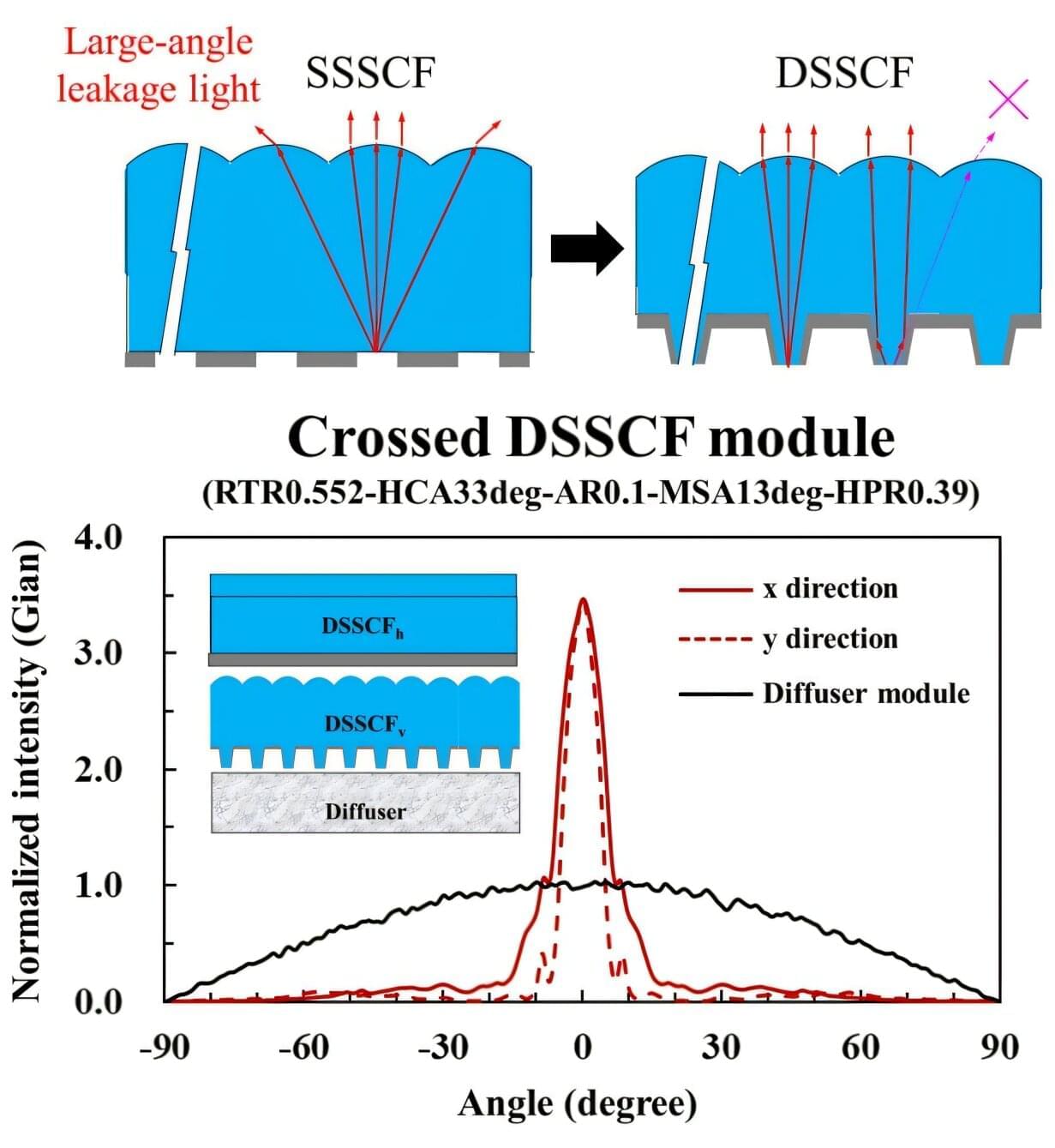
Researchers have developed an ultra-thin optical film that improves the quality of the light used in LCD resin-based 3D printers. The advance helps ensure that tiny details are reproduced with precision, which could make it possible to 3D-print medical-grade or industrial-grade products at a lower cost.
Resin-based 3D printing, or vat photopolymerization, uses short-wavelength light to project patterns onto liquid photosensitive resin. Although this additive manufacturing approach enables highly detailed, smooth parts, some low-cost systems rely on LCD backlights that can reduce printing accuracy.
“LCD-based liquid 3D printing suffers from surface roughness or dimensional inaccuracies due to improper light angular distribution from the backlight systems used,” said research team leader Ding-Zheng Lin from National Taiwan University of Science and Technology. “Our goal was to fix these problems without increasing equipment size, thereby elevating print performance to professional grade.”