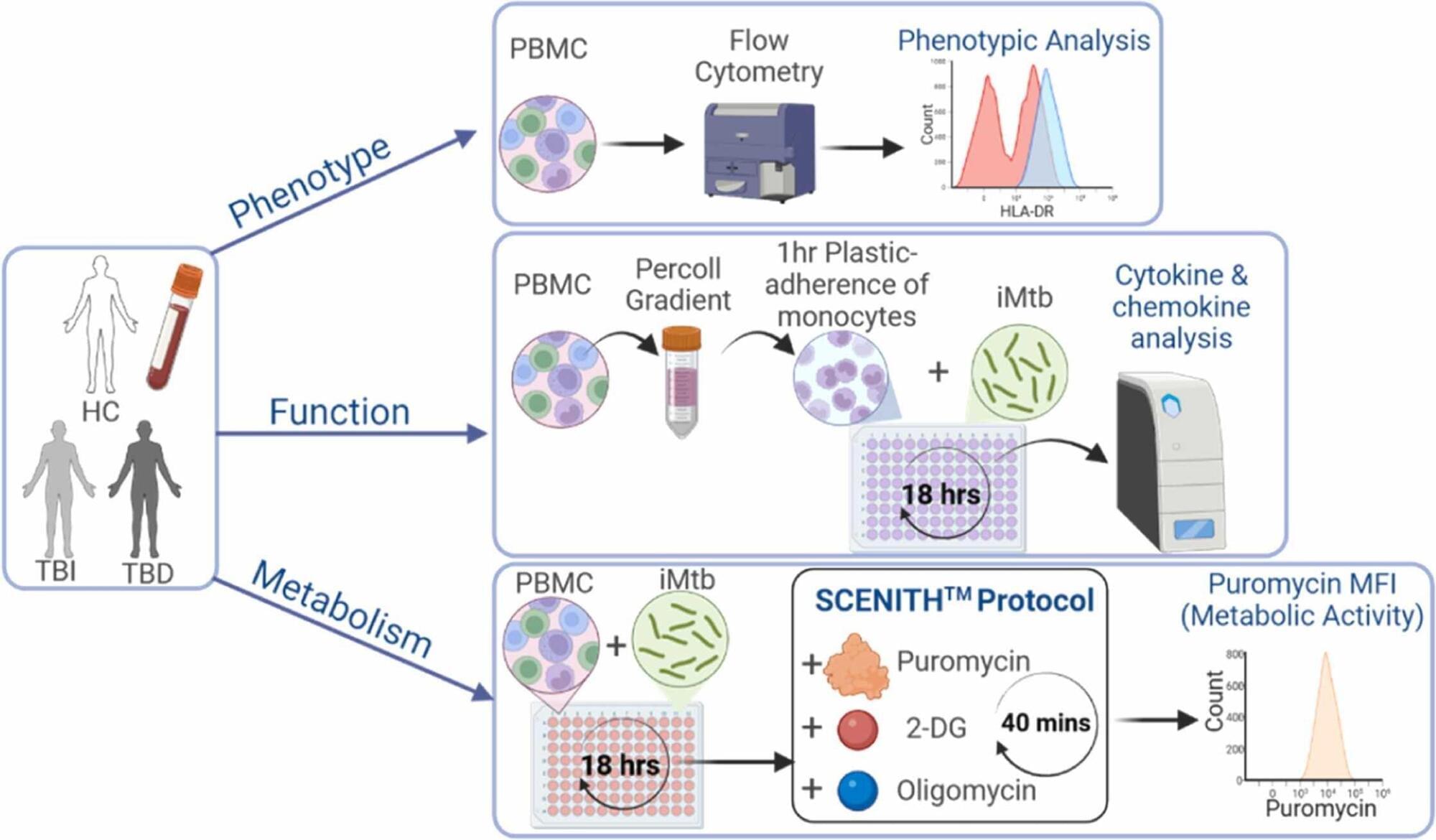
Researchers at Trinity College Dublin have identified key differences in how immune cells generate and use energy, a process known as cellular metabolism, in people with latent versus active tuberculosis (TB). The findings offer new insights into why some individuals control infection while others develop disease.
The study, published in the Journal of Infection, focused on circulating monocytes, key immune cells involved in the defense against TB infection. The researchers found that cells from people with latent TB remain metabolically flexible, allowing them to mount strong antibacterial responses, whereas cells from people with active TB disease show impaired metabolism and weaker responses to infection.
TB remains the world’s leading infectious killer, with 10.8 million cases and 1.25 million deaths recorded globally in 2023. While many people infected with Mycobacterium tuberculosis never become ill, researchers still do not fully understand why some individuals progress to active disease while others successfully control the infection. The findings could help pave the way for improved TB monitoring tools and future therapies or vaccines that target how immune cells generate energy.