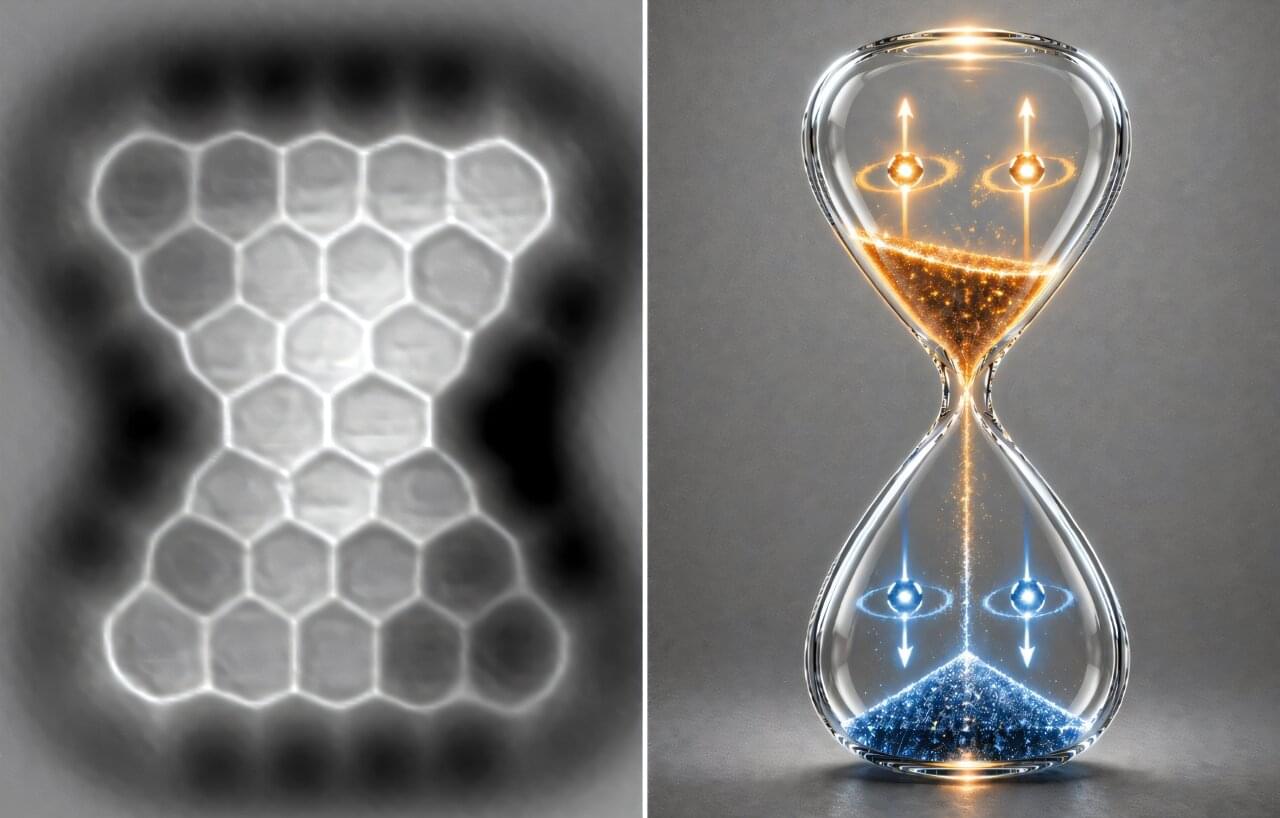
Researchers from the National University of Singapore (NUS) and collaborators have developed a predictive design strategy for creating graphene-like molecules with multiple interacting spins and enhanced resilience to magnetic perturbations, opening new avenues for molecular-scale quantum information technologies and next-generation spintronics.
The research team was led by Professor Lu Jiong from the NUS Department of Chemistry and the NUS Institute for Functional Intelligent Materials, together with Professor Wu Jishan from the NUS Department of Chemistry, and international collaborators, including key contributor Professor Pavel Jelínek from the Czech Academy of Sciences in Prague.
Magnetic nanographenes, which are molecules composed of fused benzene rings, are of growing interest for quantum technologies because they can host unpaired electrons, or spins, that may be used to store and process information. Unlike conventional magnetic materials based on metal atoms, these carbon-based systems offer chemical versatility and long spin coherence times. However, engineering a single molecule that contains multiple strongly coupled spins in a stable and controlled manner remains a major challenge.