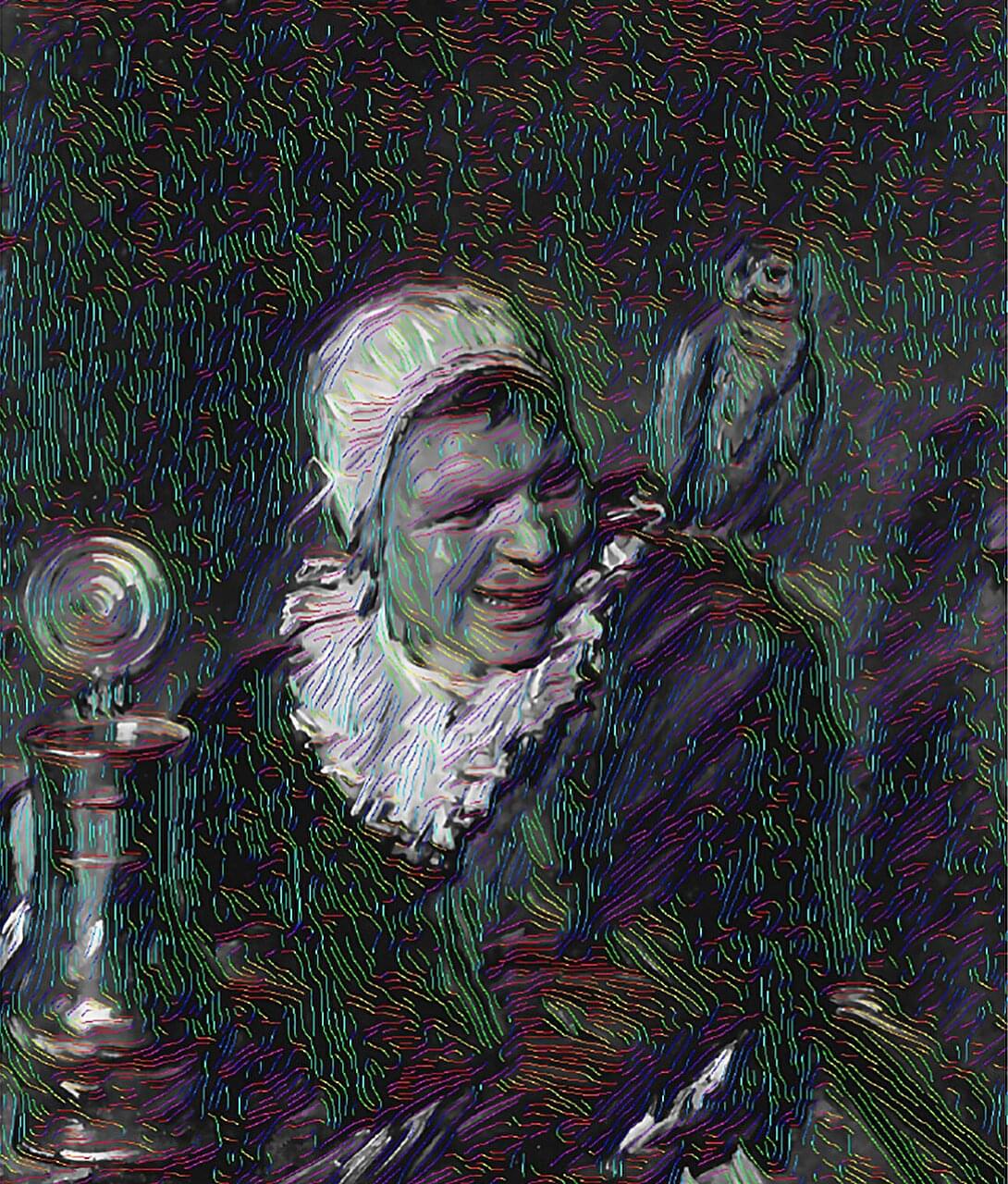
Paintings are often made up of thousands of tiny brushstrokes, each going in a certain direction, that are not easily observed by the viewer. A cross-disciplinary research team from the Penn State College of Information Sciences and Technology (IST) and Loughborough University in England has developed an image analysis method that helps to make the underlying brushstroke structure of paintings visible, giving new insight into how artists physically created their works.
This approach offers both experts and non-experts a fresh way to observe and interpret the making of artworks. The research was recently published in the journal Patterns.
The researchers bridged art and data science to show that painting style can be quantified and visualized as flow, turning elusive qualities like “gesture” into measurable, analyzable data. They used a computational technique to examine very small patches of Impressionist paintings, determining the direction of the brushstroke in each tiny spot and connect these different directions, as if drawing lines that follow the flow.