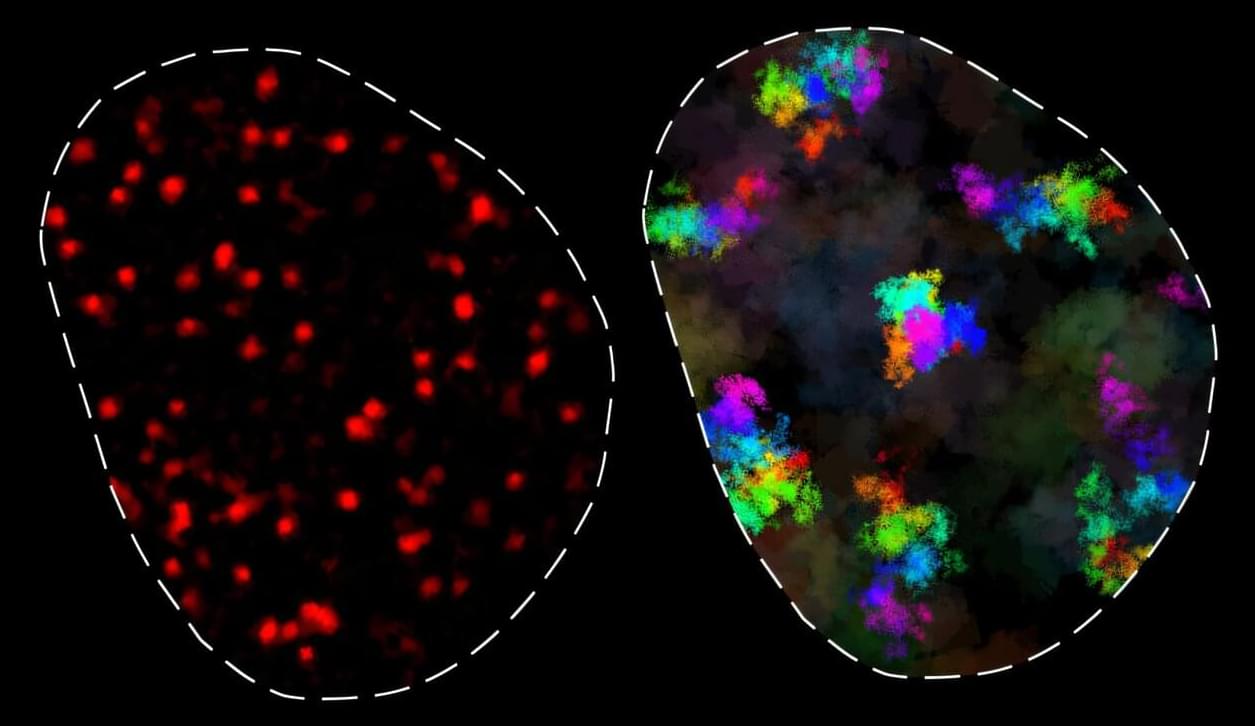
Gene expression is controlled, in part, by the interactions between genes and regulatory elements located along the genome. Those interactions depend on the ability of chromatin—a mix of DNA and proteins—to move around within a crowded space. In a new study, MIT researchers have measured chromatin movement at timescales ranging from hundreds of microseconds to hours, allowing them to rigorously quantify those dynamics for the first time.
Their analysis revealed that chromatin can exist in two different categories: In one, chromatin moves in a constrained way that allows it to primarily contact only neighboring regions of the genome; in the other, chromatin moves more freely and contacts regions that are farther away, but only over longer timescales.
The findings offer insight into how gene expression is regulated, as well as how chromatin segments come together for other processes such as DNA repair, the researchers say.