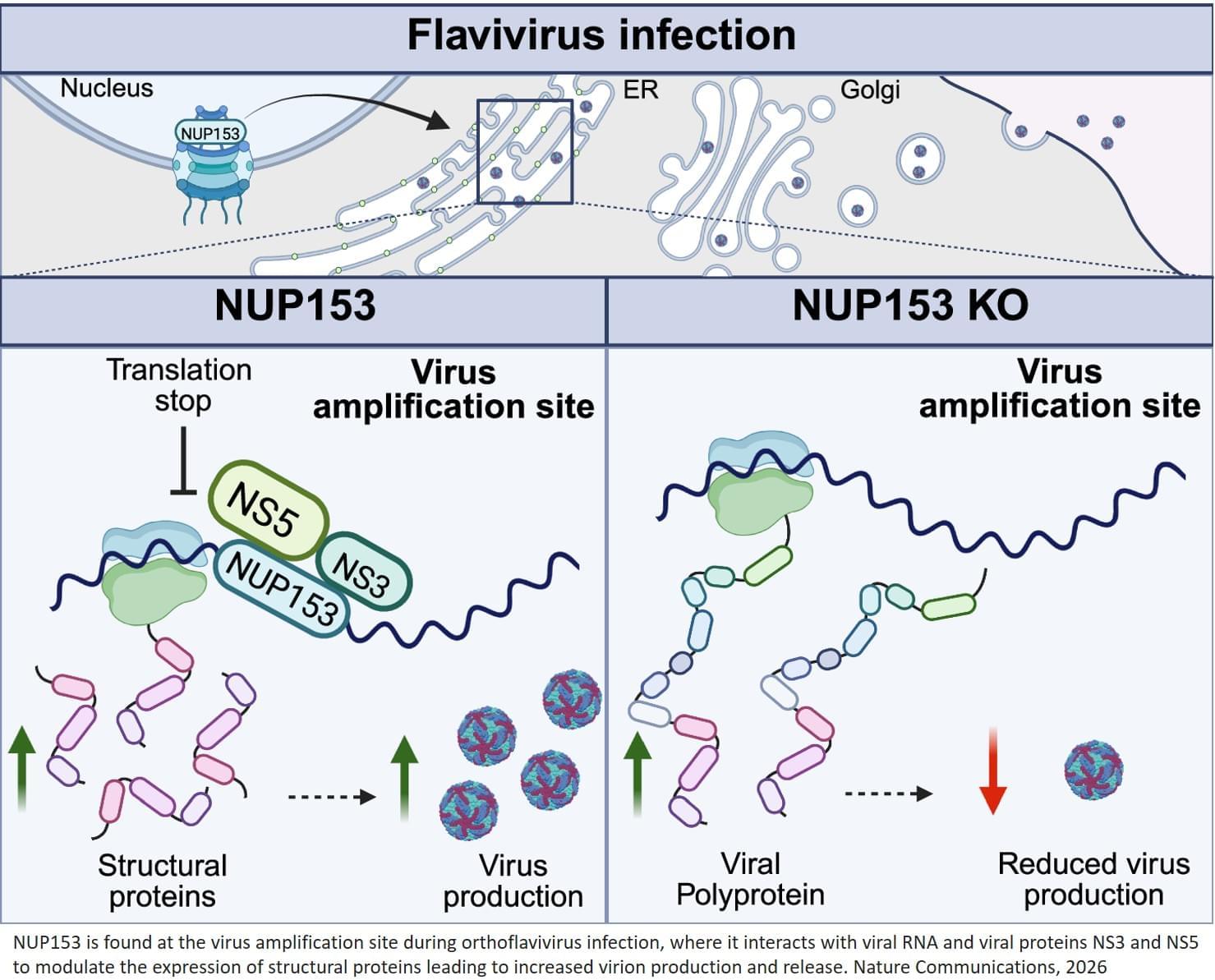
In two recently published studies, the nucleoporins NUP98 and NUP153 have been identified as key host factors in orthoflavivirus infection.
NUP98 and NUP153 are normally part of the nuclear pore complex, which regulates the transport of proteins and RNA between the cell nucleus and the cytosol, the fluid in which the cell’s internal components are suspended. Since orthoflaviviruses copy their RNA in the cytosol, these proteins had not previously been linked to the viral life cycle.
The researchers now show that during infection, both nucleoporins are recruited to viral replication sites in the cytosol, where they bind directly to viral RNA. In addition, NUP153 also interacts with viral proteins.
“It was surprising to see how proteins that normally act as ‘gatekeepers’ to the nucleus instead become active participants in the virus’s replication machinery,” says the first author.
The studies show that NUP98 and NUP153 have distinct roles during infection. NUP98 is required for efficient replication of viral RNA, while NUP153 influences how much of the different viral proteins are produced.
NUP153 binds to a specific region of the viral RNA located between the sequences encoding structural and non-structural proteins. Through this interaction, the balance between different viral proteins is regulated, which is critical at an early stage of infection. sciencenewshighlights ScienceMission.
Researchers have identified two human cell proteins, NUP98 and NUP153, that play a crucial role in how viruses such as tick-borne encephalitis virus (TBEV), West Nile virus, and dengue virus replicate in the body. The findings challenge existing views of how these viruses exploit human cells and point to new, promising targets for future antiviral drugs.
“Viruses have very small genomes and are completely dependent on the host cell’s machinery. By understanding which human proteins viruses hijack, we can identify new ways to stop infection,” says the research lead.
TBE virus, West Nile virus, and dengue virus belong to a closely related group of flaviviruses and cause illness in millions of people worldwide every year. Despite the substantial disease burden, there are still no approved antiviral drugs. One alternative strategy is therefore to target the host cell’s own proteins that viruses depend on for replication.