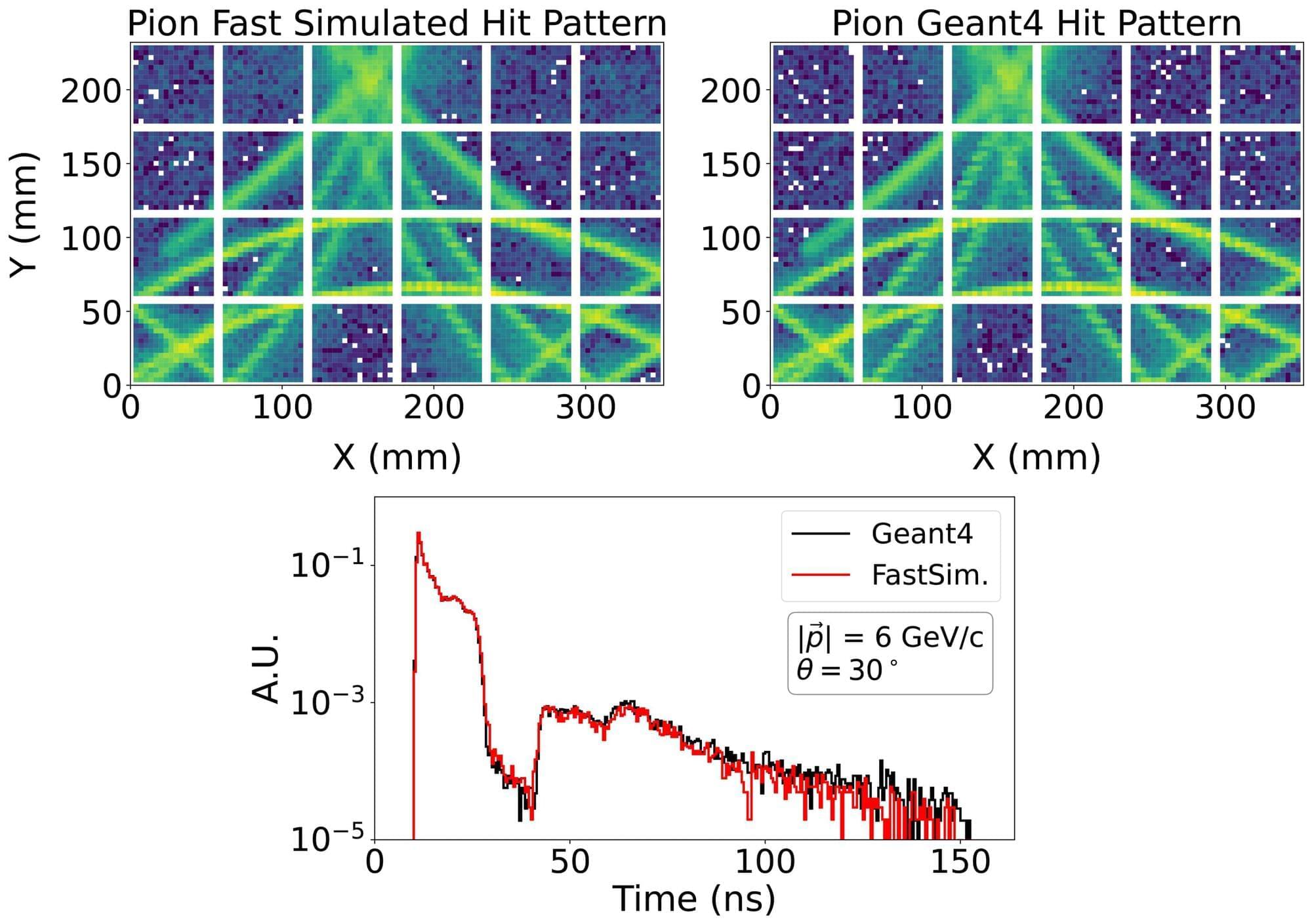
Artificial intelligence and machine learning are shaping major design and research decisions for the planned Electron-Ion Collider (EIC), a next-generation nuclear physics research facility that will collide electrons with protons or nuclei to probe matter’s structure.
The EIC—being built at the U.S. Department of Energy’s (DOE) Brookhaven National Laboratory in partnership with DOE’s Thomas Jefferson National Accelerator Facility (Jefferson Lab)—will reveal the inner structure of matter in unprecedented detail. It is the world’s first collider designed with AI and machine learning integrated into both its accelerator and detector systems.
“EIC is a new facility that can take advantage of AI and machine learning from the start,” said Tanja Horn, a professor of physics at The Catholic University of America, and co-chair of AI4EIC, a working group devoted to developing AI for the EIC. “A wide array of AI tools is now available—perfectly timed for the EIC.”