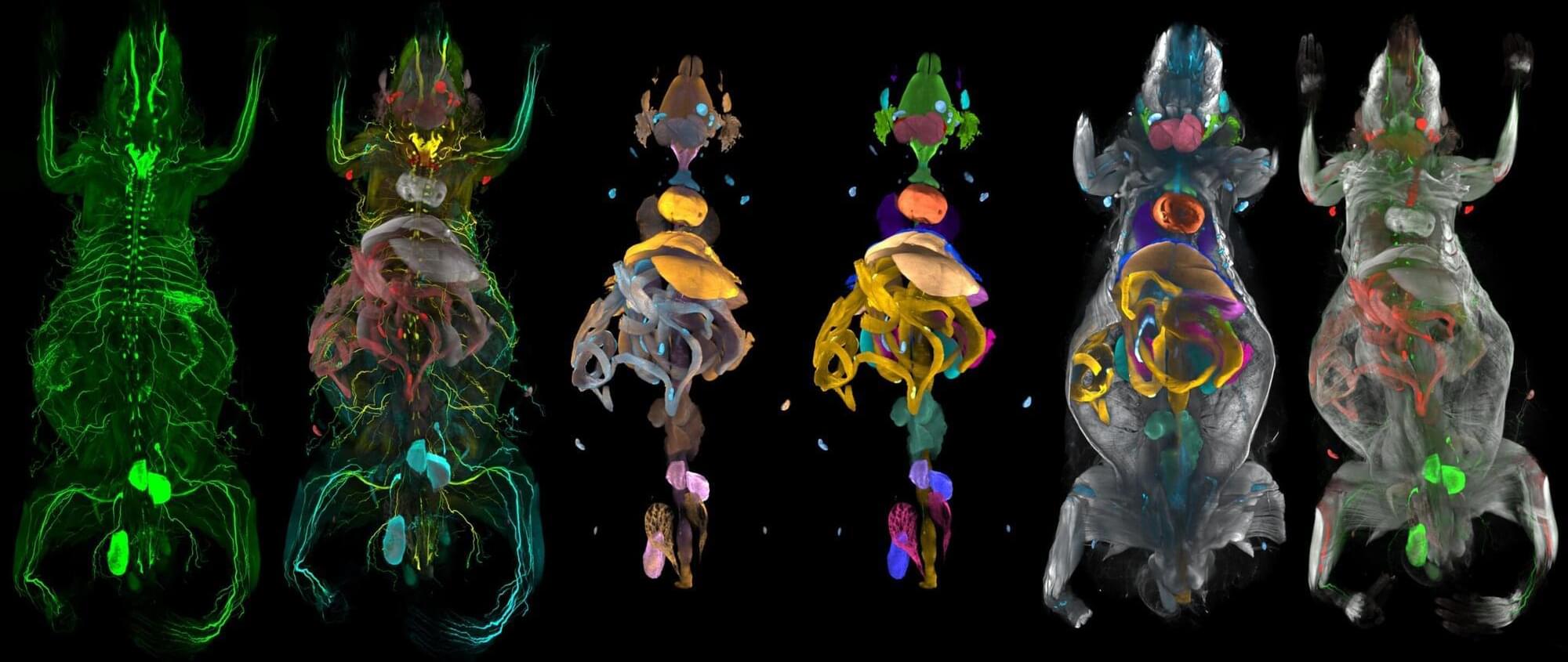
Obesity affects far more than metabolism and fat storage. It alters immune activity, nerve structure, and tissue organization across multiple organ systems, increasing the risk of diseases including type 2 diabetes, cardiovascular disease, stroke, neuropathy and cancer. Yet despite these systemic effects, researchers have lacked tools capable of studying disease-associated changes across the entire body in intact organisms and at high resolution.
A team led by Prof. Ali Ertürk, Director of the Institute for Biological Intelligence (iBIO) at Helmholtz Munich and Professor at the LMU, has now developed MouseMapper, a suite of foundation-model-based deep-learning algorithms designed to analyze whole-body biological imaging data. The framework automatically segments 31 organs and tissue types while quantitatively mapping nerves and immune cells throughout the body, enabling comprehensive multi-system analysis in intact mice.
“MouseMapper is built on a foundation model, which means it generalizes far beyond the data it was originally trained on,” says Ying Chen, co-first author of the study published in Nature.