CcCoV-KY43 is found in heart-nosed bats, or Cardioderma cor, an ecologically important species found mainly in eastern Africa, including eastern Sudan and northern Tanzania.
The researchers say the zoonotic (animal-to-human) and pandemic potential of alphaCoVs has remained relatively unchartered – to date, only two cellular receptors have been characterized for alphaCoVs.
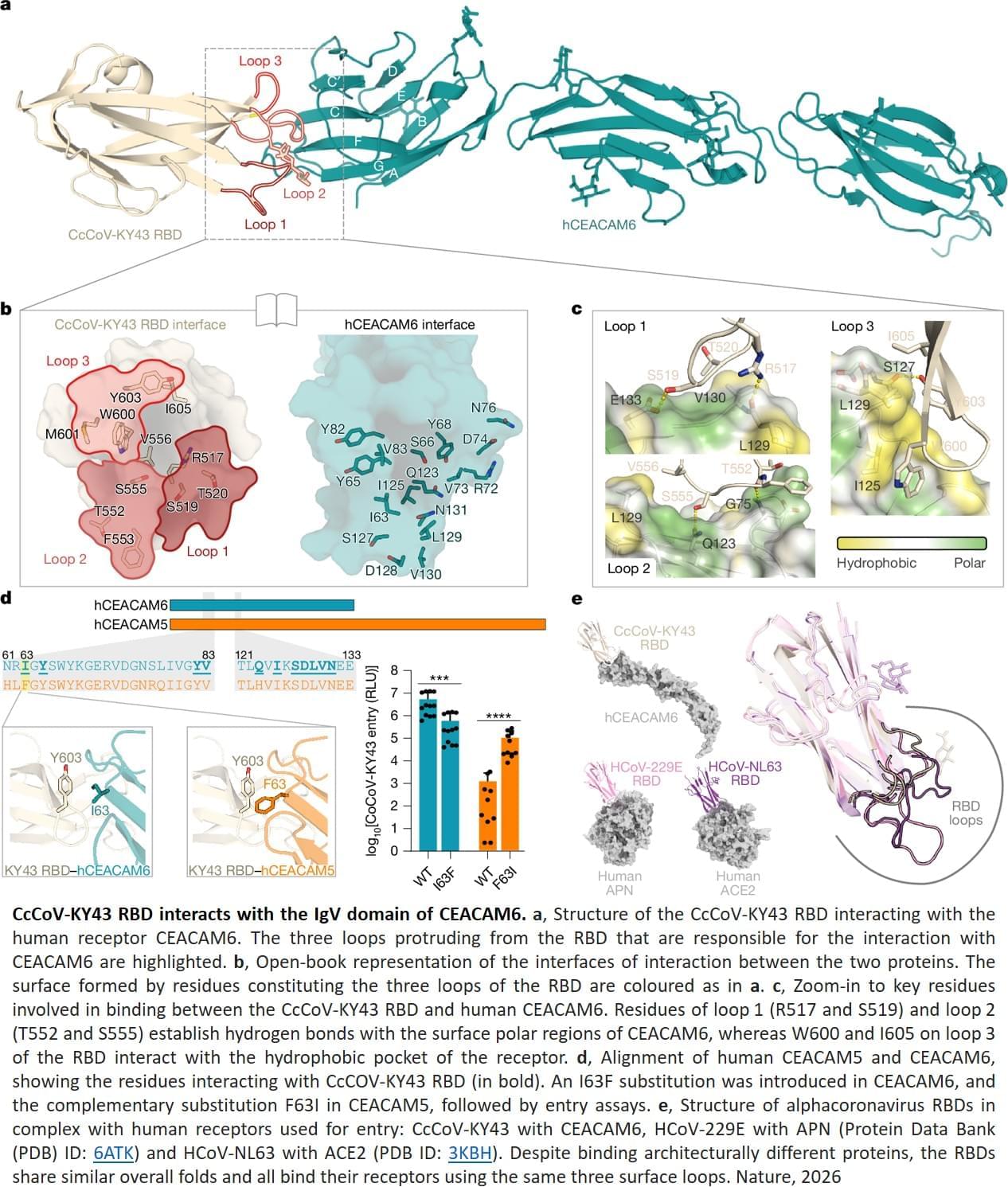
They screened the CcCoV-KY43 spike against a panel of human receptors, identified direct interactions with the human CEACAM proteins CEACAM3, CEACAM5 and CEACAM6. Overexpression of human CEACAM6—a protein widely expressed in the human lung—conferred permissivity to otherwise refractory human cells.
During the study, partners provided specific expertise. They identified CcCoV-KY43’s ability to infect human cells and confirmed CEACAM6 supports human cell entry.
They measured how strongly CEACAM6 binds to the spike, and solved the spike structure and receptor binding in atomic detail. They showed that the RBD binds the amino-terminal IgV-like domain of human CEACAM6.
They also made initial CcCov detection in bats and mapped it across Kenya, and showed where CEACAM6s is expressed in the human body, testing serum from people living in CcCoV areas to see if they might have previously been infected by CcCoV-KY43.
An international team of researchers has identified an East African bat coronavirus capable of entering human cells.
Whilst the virus — Cardioderma cor coronavirus (CcCoV) KY43, or CcCoV-KY43 – can bind to a cell receptor found in the human lung, preliminary testing in Kenya suggests it has not spilled over into the local human population.
Rather than work on ‘live’ viruses, the scientists used a public database of known genetic sequences, Genbank, to select and synthesise alphacoronavirus ‘spike’ proteins, including 27 viruses originally isolated in bats, and screened these against a library of coronavirus receptors found in human cells.