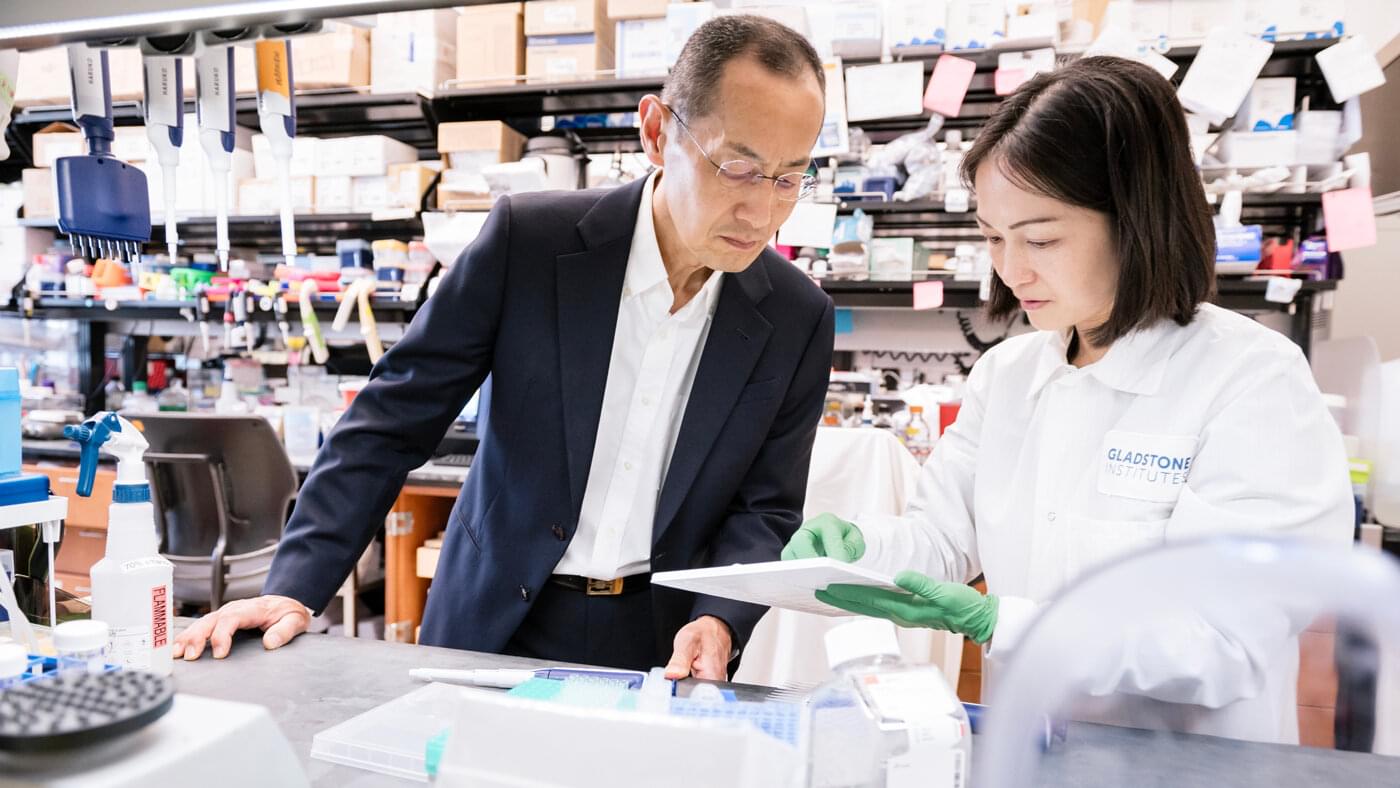
Years before he conducted the research that would earn him a Nobel Prize in Physiology and Medicine, Shinya Yamanaka, MD, Ph.D., was a postdoctoral scientist at Gladstone Institutes, studying genes. There, he helped discover a gene (now called eIF4G2) that’s essential for early embryonic development.
Then, the story pauses. Without the technology needed to develop an animal model to further investigate the gene, Yamanaka moved on to develop induced pluripotent stem (iPS) cells—adult cells that have been reprogrammed into an embryonic state. That work earned him the Nobel Prize, but he never forgot his first gene.
Now, 30 years since his postdoc, Yamanaka has circled back to eIF4G2.