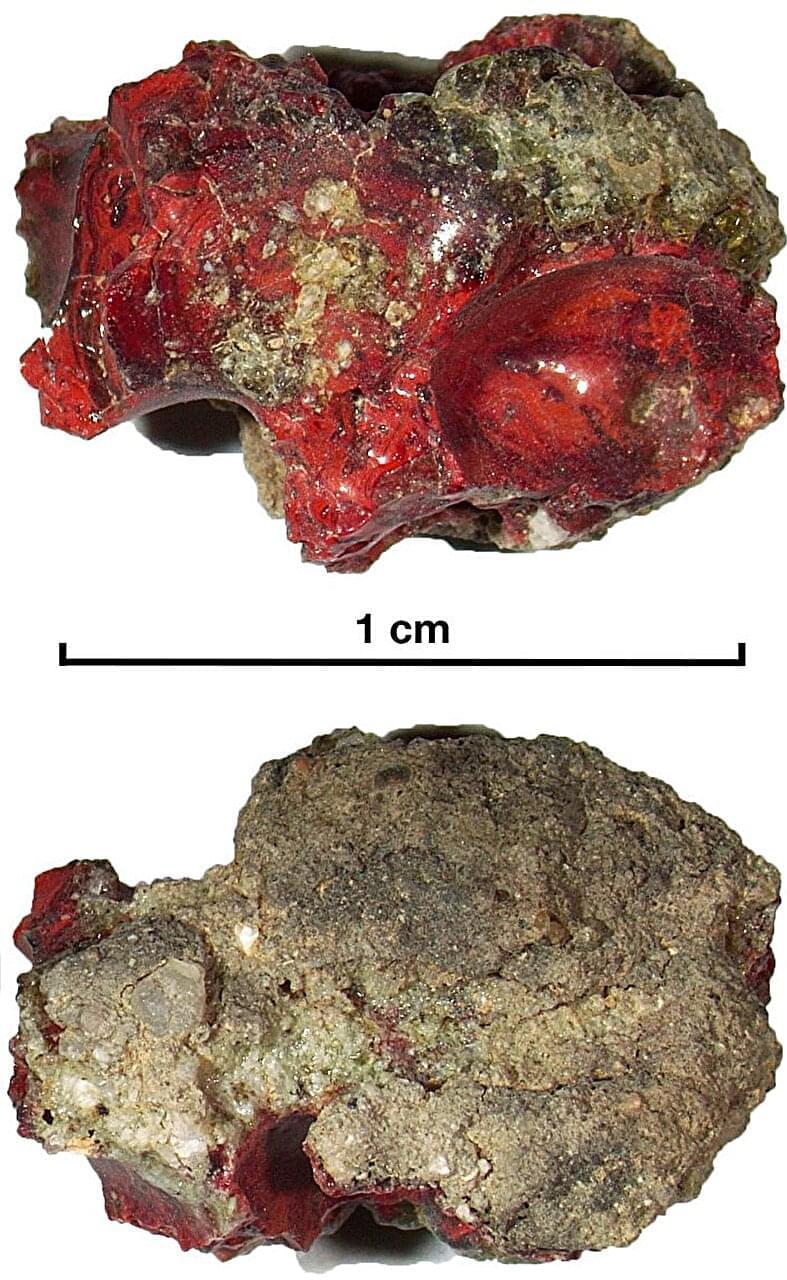
Matter behaves strangely under extreme conditions, and often, remnants of these behaviors are left behind even when conditions return to normal. The Trinity nuclear test in 1945 left behind such remnants, and now, 80 years after the explosion, researchers have identified another unique example of what happens when various materials are heated to temperatures exceeding 1,500 °C (2,730 °F) and put under pressures tens of thousands of times atmospheric pressure.
The team describes a clathrate compound never before found among nuclear-explosion products in their new study, published in the Proceedings of the National Academy of Sciences.