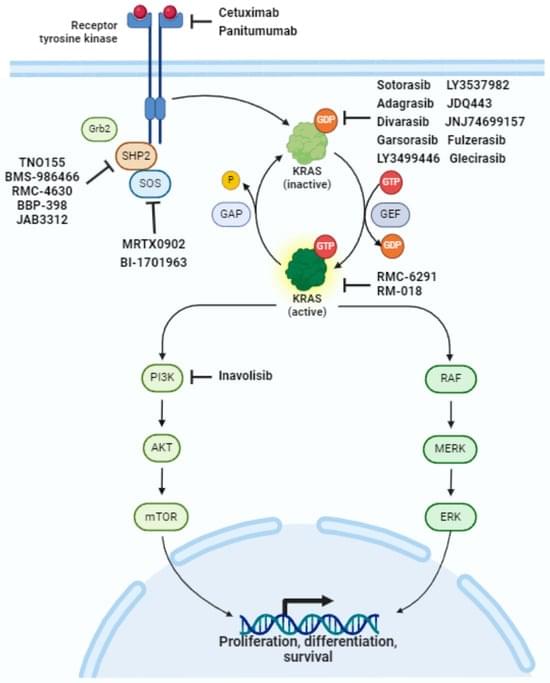
Kirsten rat sarcoma virus oncogene homolog (KRAS) is the most frequently mutated oncogene in human cancer. In colorectal cancer (CRC), KRAS mutations are present in more than 50% of cases, and the KRAS glycine-to-cysteine mutation at codon 12 (KRAS G12C) occurs in up to 4% of patients. This mutation is associated with short responses to standard chemotherapy and worse overall survival compared to non-G12C mutations. In recent years, several KRAS G12C inhibitors have demonstrated clinical activity, although all patients eventually progressed. The identification of negative feedback through the EGFR receptor has led to the development of KRAS inhibitors plus an anti-EGFR combination, thus boosting antitumor activity. Currently, several KRAS G12C inhibitors are under development, and results from phase I and phase II clinical trials are promising.