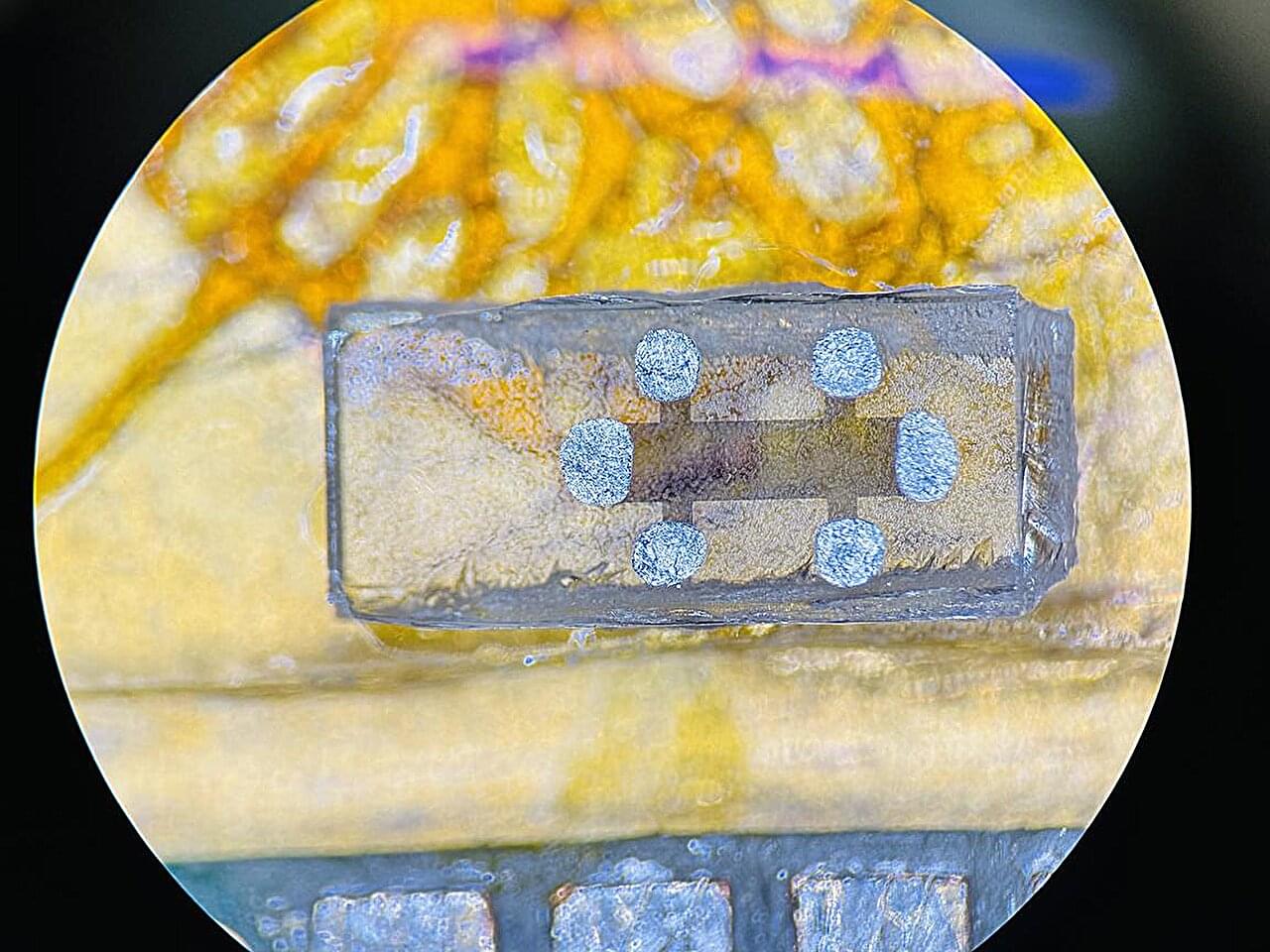
Superconductivity—the ability of a material to conduct electricity without any energy loss to heat—enables highly efficient, ultra-fast electronics essential for advanced technologies such as magnetic resonance imaging (MRI) machines, particle accelerators and, potentially, quantum computers. New research has now revealed that iron telluride (FeTe), a compound composed of the chemical elements iron and tellurium and long thought to be an ordinary magnetic metal, is in fact a superconductor. The researchers found that hidden excess iron atoms induce the material’s magnetism, and removing these atoms allows electricity to flow with zero resistance.
Two papers describing the research, both led by Penn State Professor of Physics Cui-Zu Chang, were published back-to-back today (April 1) in the journal Nature. The first paper focuses on how to “switch on” superconductivity in FeTe, while the second paper reveals a new kind of “quantum dance,” where superconductivity interacts with the material’s atomic structure when a different top layer is added, allowing researchers to tune its behavior.
“Unlike the well-known iron-based superconductor iron selenide (FeSe), FeTe has long been considered a magnetic metal without superconductivity, despite having an almost identical crystal structure,” Chang said. “It has remained a mystery why FeTe doesn’t share this important property.”