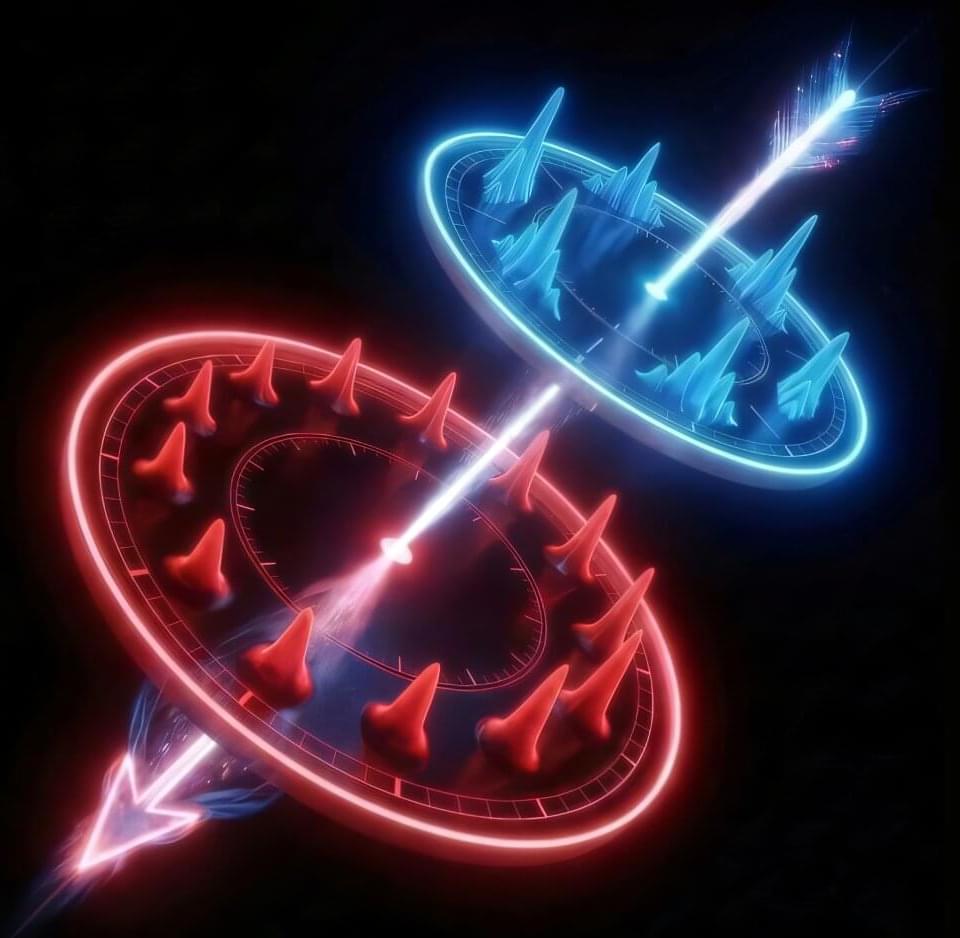
A team of international researchers, including an Aston University researcher, has cracked the code on how “breather” laser pulses work, creating a single mathematical model that explains two completely different laser behaviors for the first time. Ultrafast lasers emit extremely short pulses of light, lasting only picoseconds or femtoseconds, making them essential for applications ranging from eye surgery and biomedical imaging to precision materials processing and advanced manufacturing.
The work is published in the journal Physical Review Letters. By understanding laser behaviors better, scientists will be able to control them, making lasers more reliable and better suited to specific applications.
An ultrafast laser produces pulses of light that circulate within the laser cavity, where they can evolve into stable structures called solitons. Solitons tend to maintain their shape as they travel, unlike conventional light pulses which spread out. Usually, these solitons are identical and regular, like a heartbeat, known as steady-state emission. In a “breather” laser, the solitons change over time and successive cavity round trips, growing and shrinking before repeating the cycle, like a breathing pattern. This is an example of a non-equilibrium state, where the laser output does not remain constant but keeps evolving over time.