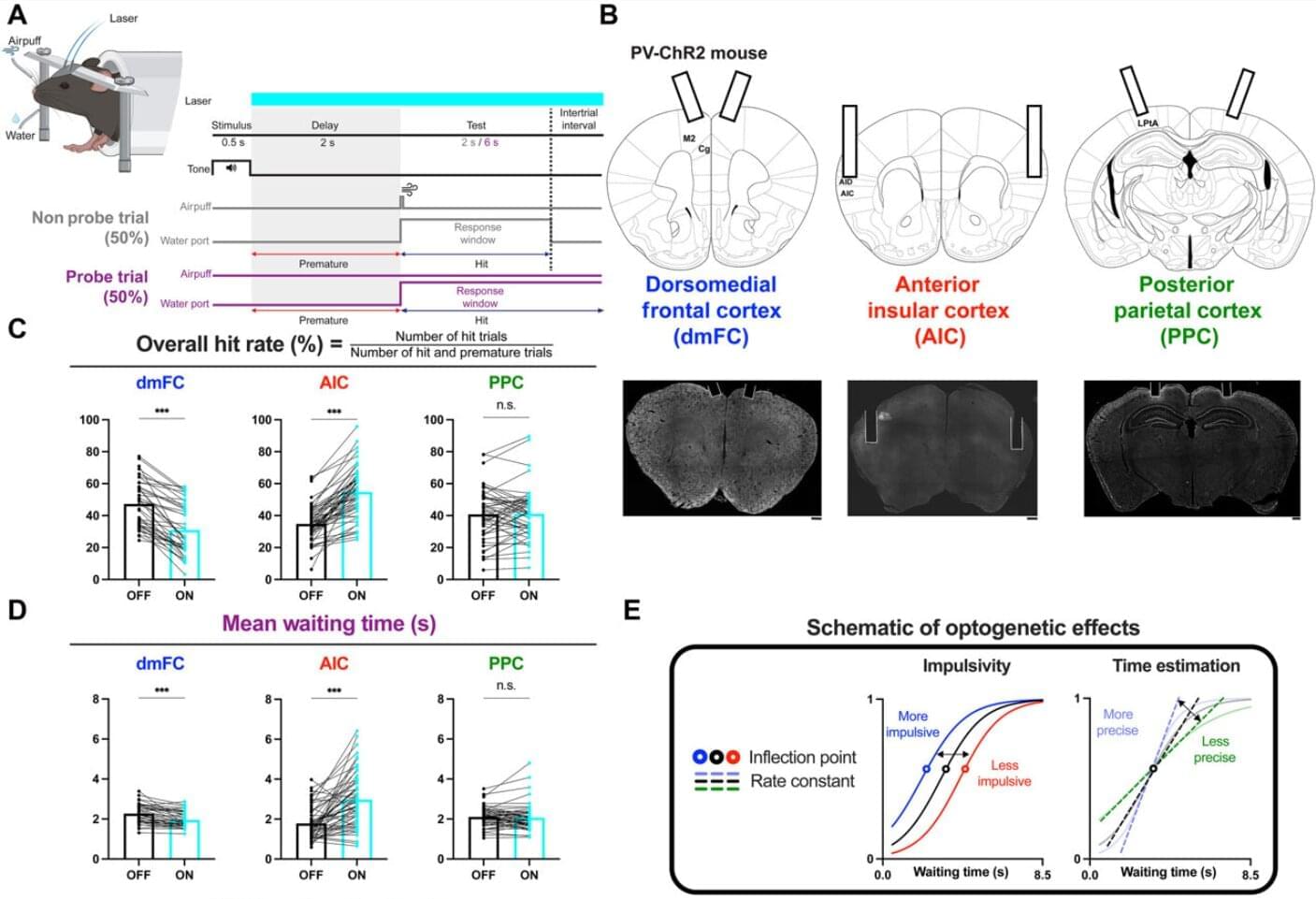
Scientists from the Lee Kong Chian School of Medicine at Nanyang Technological University, Singapore, have uncovered how different brain regions work together to enable self-control—the ability to suppress impulsive behaviors and wait for the right moment to act. Their findings advance the understanding of conditions such as attention-deficit hyperactivity disorder (ADHD) and addiction, and could lead to more effective management of these disorders.
According to the researchers, this is the first time that this interplay underlying self-control has been found in the brain. The findings were reported in Science Advances.