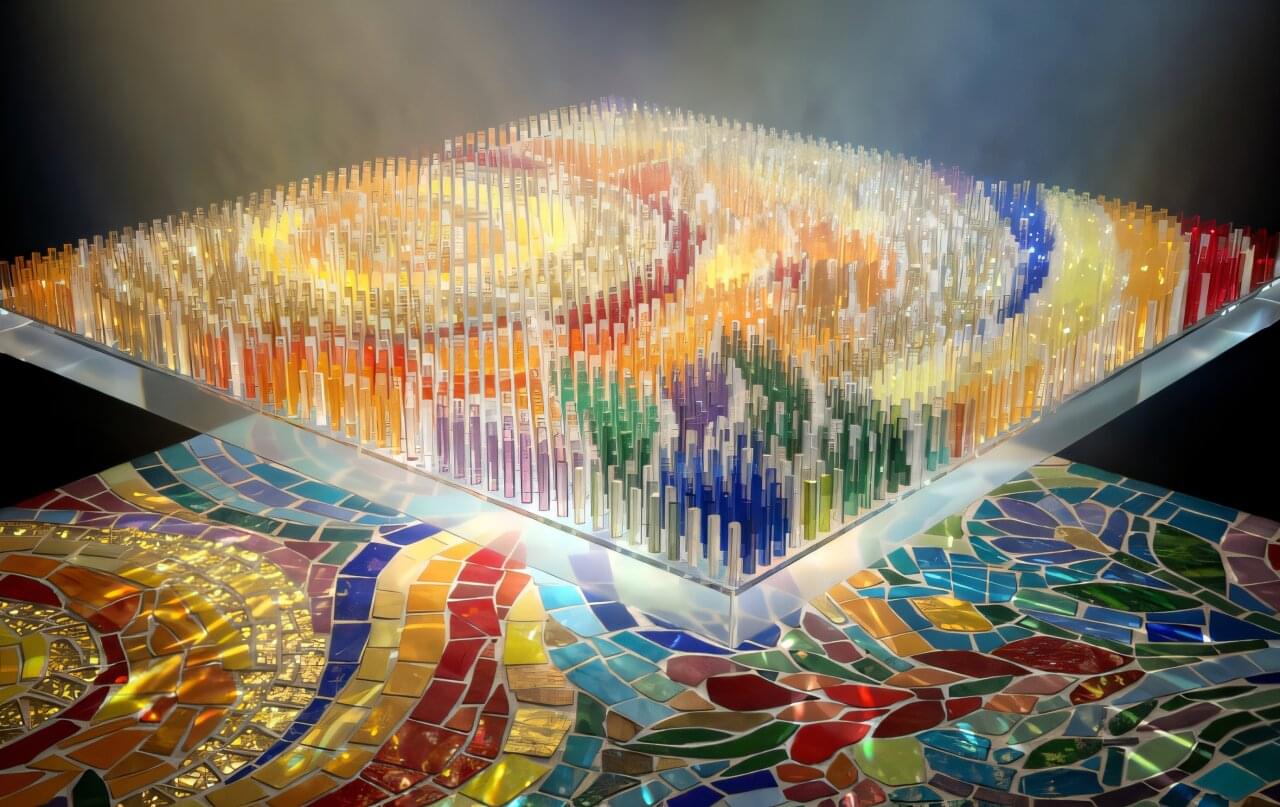
Researchers from the Monash University School of Physics and Astronomy have flipped a long-held assumption in optics, showing that deliberately introducing controlled disorder into ultra-thin optical devices can dramatically increase their power and versatility, without making them bigger or more complex.
Published in Nature Communications, the study reveals a new class of “disordered mosaic metasurfaces” nanostructured materials that manipulate light, capable of performing multiple optical functions simultaneously within a single device.
At the center of the breakthrough is a counterintuitive idea: instead of carefully arranging structures in perfect order, the team scattered them in a controlled, mosaic-like pattern, and found that performance didn’t degrade. In fact, it improved.