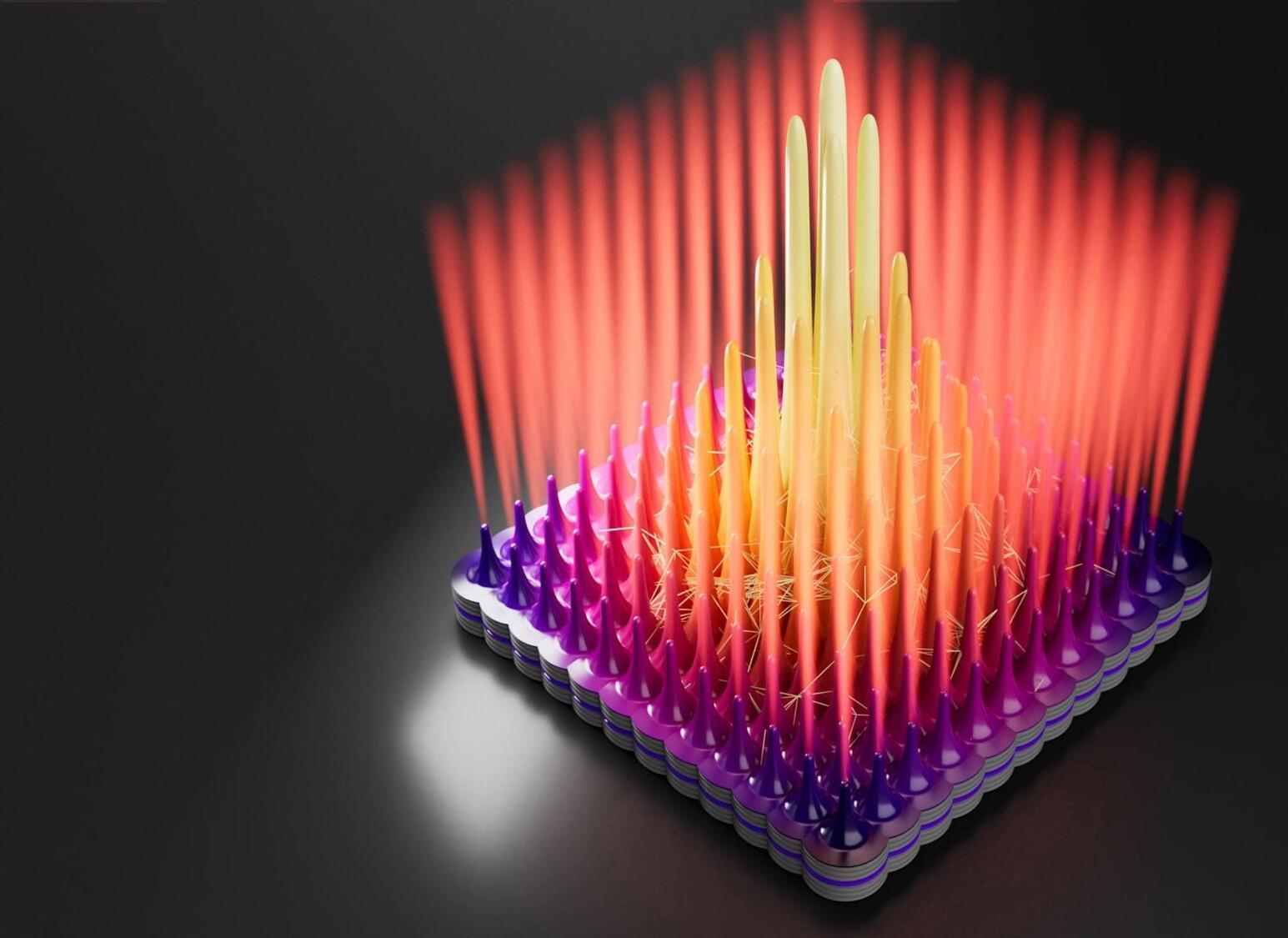
Why do patterns emerge as surfaces grow, whether in crystals, flames, or living systems? Physicists have long turned to the Kardar–Parisi–Zhang (KPZ) equation, proposed in 1986, as a unifying description of these processes. This theory captures how randomness and nonlinear effects shape growth across vastly different systems, from spreading bacterial colonies to data-driven algorithms.
Now, researchers at the University of Würzburg have taken a major step toward confirming just how universal this idea really is. After earlier success in one dimension, they have demonstrated for the first time that KPZ behavior also governs growth in two-dimensional systems, a milestone that had remained experimentally out of reach.