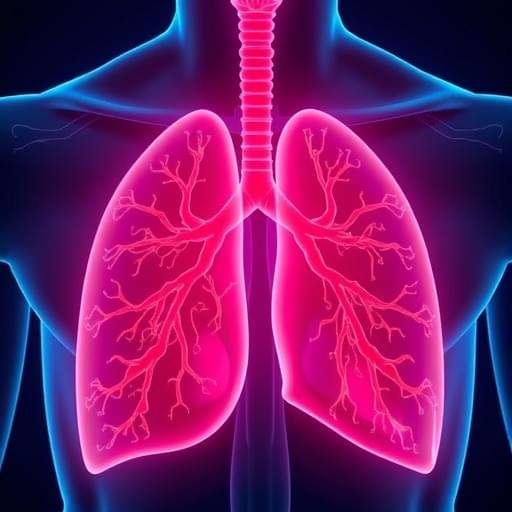
Researchers at Oregon State University have pioneered a transformative approach for simultaneously targeting lung cancer and the debilitating muscle-wasting syndrome known as cachexia—a condition that plagues many lung cancer patients. Their groundbreaking work employs lipid nanoparticles (LNPs) as a delivery vehicle for messenger RNA (mRNA) therapeutics, addressing critical challenges in precision drug delivery for aggressive tumors deep within the lung tissue.
Lipid nanoparticles, microscopic carriers composed of fatty compounds like lipids, have revolutionized drug delivery with their ability to ferry genetic material directly into cells. In this study, the OSU team engineered LNPs comprised of DC-cholesterol and a specialized ionizable lipid, 113-O12B, which exhibited a remarkable ability to bind a blood serum protein called vitronectin. This binding triggers the formation of a protein corona on the nanoparticles, a dynamic interface that actively guides the LNPs to lung tissue, and more importantly, lung tumor microenvironments.
Vitronectin’s recruitment is no coincidence. It interacts with integrin receptors—cellular docking proteins highly expressed on lung cancer cells. These integrins act as biological gateways, facilitating enhanced uptake of the therapeutic nanoparticles by tumor cells while sparing healthy tissue. This receptor-mediated targeting marks a significant advance over conventional LNPs, which commonly accumulate in the liver, limiting their therapeutic index against lung malignancies.